Dao De Jing
Ancient Manuscripts
A collection of scanned Dao De Jing manuscripts from various historical sources
The collection includes scans of the Guodian and Mawangdui manuscripts, the Peking University (Beida) and Dunhuang copies, the Heshanggong commentary, the Wang Bi text, Fu Yi's 'old text' and the Louguan steles.
Chapters
20 chapters have been fully processed so far. New scans will be added as they are processed; until then, unprocessed chapters contain only the texts and translations without scans.
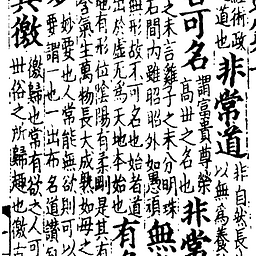 1
17 sources
1
17 sources
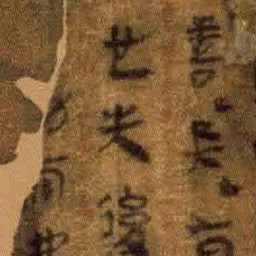 2
19 sources
2
19 sources
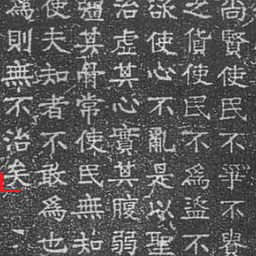 3
21 sources
3
21 sources
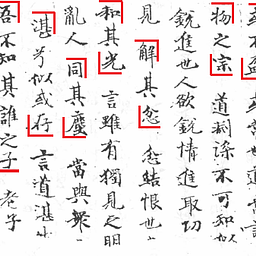 4
22 sources
4
22 sources
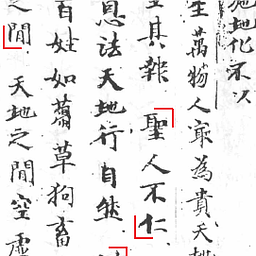 5
23 sources
5
23 sources
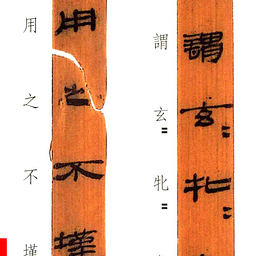 6
21 sources
6
21 sources
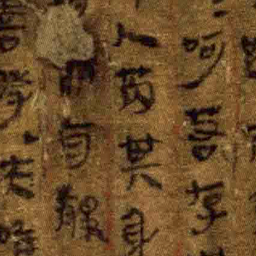 7
19 sources
7
19 sources
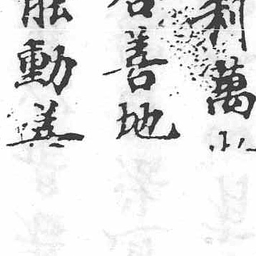 8
22 sources
8
22 sources
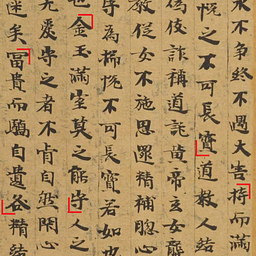 9
24 sources
9
24 sources
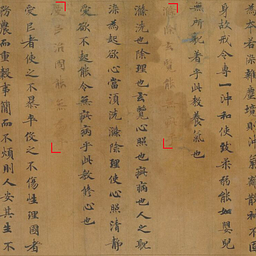 10
25 sources
10
25 sources
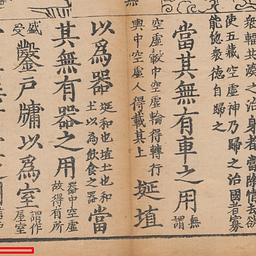 11
22 sources
11
22 sources
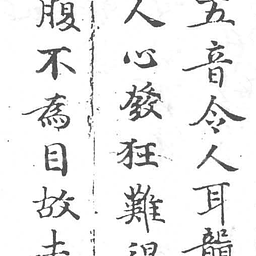 12
22 sources
12
22 sources
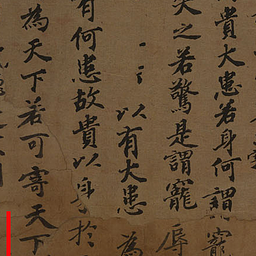 13
22 sources
13
22 sources
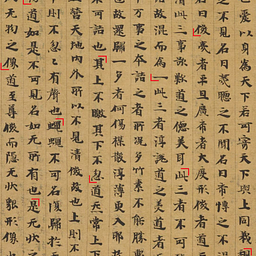 14
21 sources
14
21 sources
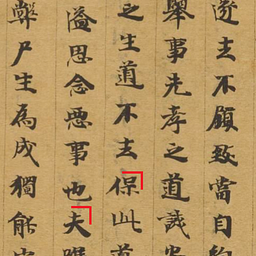 15
23 sources
15
23 sources
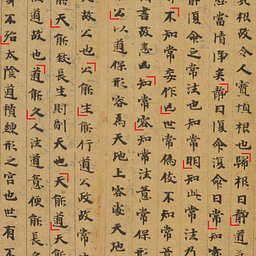 16
22 sources
16
22 sources
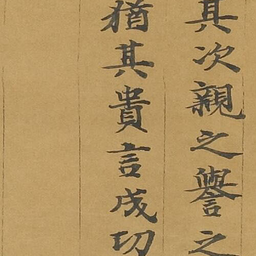 17
21 sources
17
21 sources
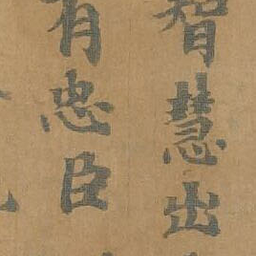 18
20 sources
18
20 sources
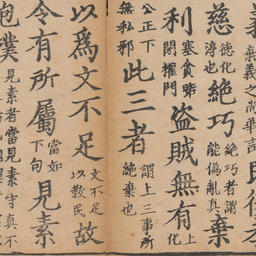 19
20 sources
19
20 sources
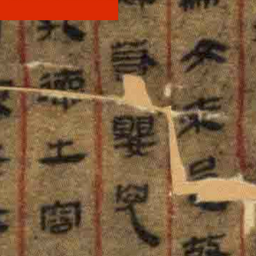 20
22 sources
21
—
22
—
23
—
24
—
25
—
26
—
27
—
28
—
29
—
30
—
31
—
32
—
33
—
34
—
35
—
36
—
37
—
38
—
39
—
40
—
41
—
42
—
43
—
44
—
45
—
46
—
47
—
48
—
49
—
50
—
51
—
52
—
53
—
54
—
55
—
56
—
57
—
58
—
59
—
60
—
61
—
62
—
63
—
64
—
65
—
66
—
67
—
68
—
69
—
70
—
71
—
72
—
73
—
74
—
75
—
76
—
77
—
78
—
79
—
80
—
81
—
20
22 sources
21
—
22
—
23
—
24
—
25
—
26
—
27
—
28
—
29
—
30
—
31
—
32
—
33
—
34
—
35
—
36
—
37
—
38
—
39
—
40
—
41
—
42
—
43
—
44
—
45
—
46
—
47
—
48
—
49
—
50
—
51
—
52
—
53
—
54
—
55
—
56
—
57
—
58
—
59
—
60
—
61
—
62
—
63
—
64
—
65
—
66
—
67
—
68
—
69
—
70
—
71
—
72
—
73
—
74
—
75
—
76
—
77
—
78
—
79
—
80
—
81
—
Available Sources
郭店 (Guodian)
Bamboo slips from Guodian, Hubei province (circa 300 BCE). The oldest known version of the Daodejing.
马王堆 (Mawangdui)
Silk manuscripts from Mawangdui, Hunan province (circa 168 BCE). Two versions (A and B) discovered in 1973.
北大 (Beida)
Peking University Han bamboo slips, acquired in 2009. Important for its completeness and clarity.
敦煌 (Dunhuang)
Manuscripts from the Mogao Caves (4th-11th century CE). Over 50 versions with significant textual variations.
河上公 (Heshanggong)
Two editions with the Heshanggong commentary, one of the oldest interpretations of the Daodejing.
王弼 (Wang Bi)
The canonical Wang Bi text (ca. 240 CE) — the basis of the standard chapter numbering.
傅奕 (Fu Yi)
The Fu Yi 'old text' (古本) edition, 7th century CE.
楼观 (Louguan)
Two stone steles with the Daodejing text from Louguan.
Translations
Jean-François Noëlas
la 1729
The first European-language translation of the Daodejing (Latin manuscript, c. 1720s)
Archimandrite Daniil (Sivillov)
ru 1828
The first Russian translation (1828 manuscript, published 1915)
Stanislas Julien
fr 1842
The first published complete translation into a modern European language (1842)
John Chalmers
en 1868
The first English translation (1868)
Reinhold von Plaenckner
de 1870
The first German translation (1870)
Victor von Strauß
de 1870
The first German translation made to scholarly standards (1870)
James Legge
en 1891
The classic translation from the Sacred Books of the East (1891)
D.P. Konisi
ru 1894
The first published Russian translation (1894)
Leo Tolstoy
ru 1910
Sayings of Laozi selected by Tolstoy (1910/1913)
Richard Wilhelm
de 1911
The most influential German translation (1911)
Paul Carus
en 1913
The translation by Open Court editor Paul Carus (1913)
Léon Wieger
fr 1913
One of the most influential French translations (1913)