Textes originaux

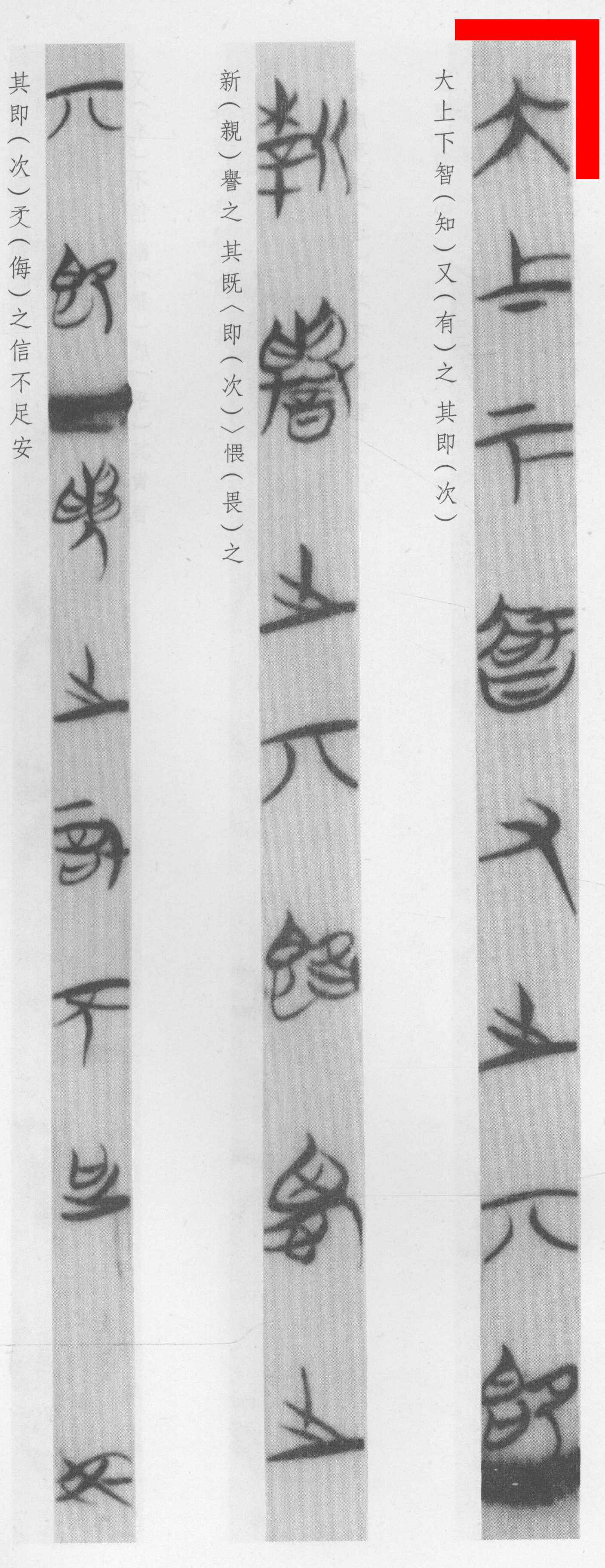
Guodian Laozi C

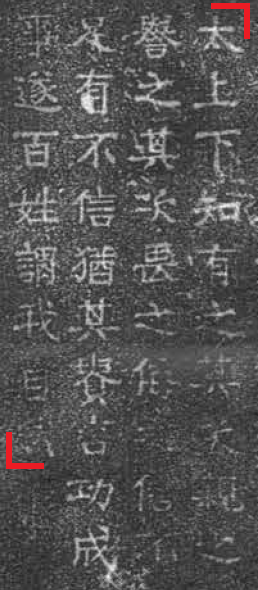
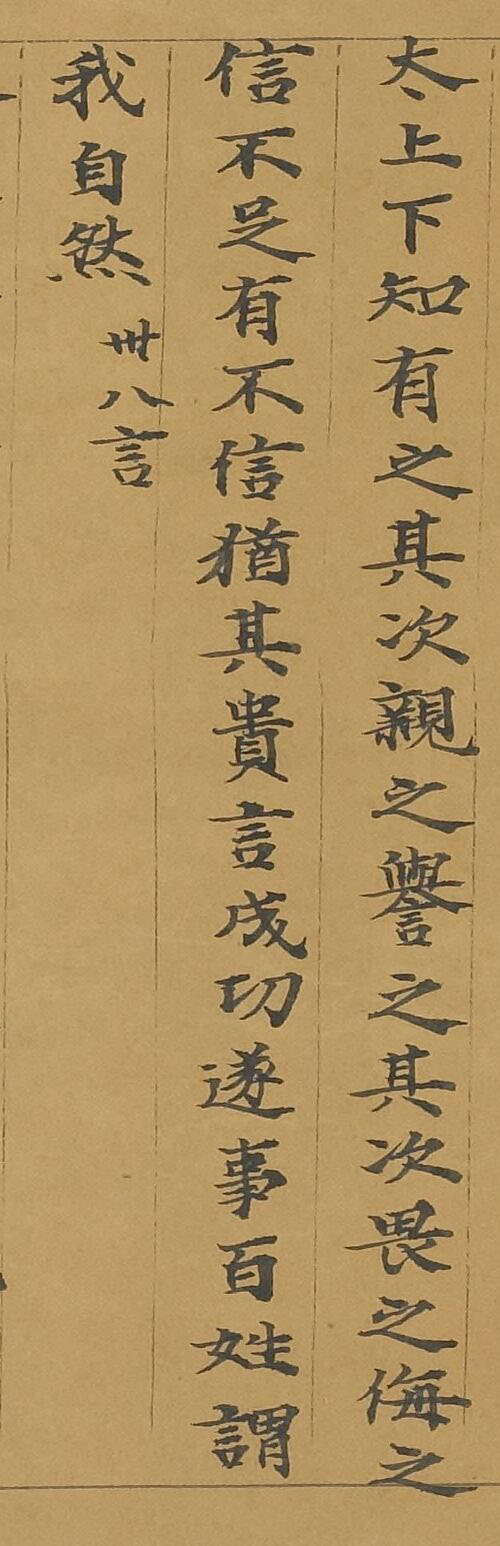
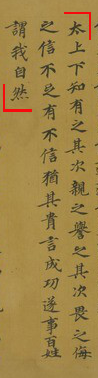
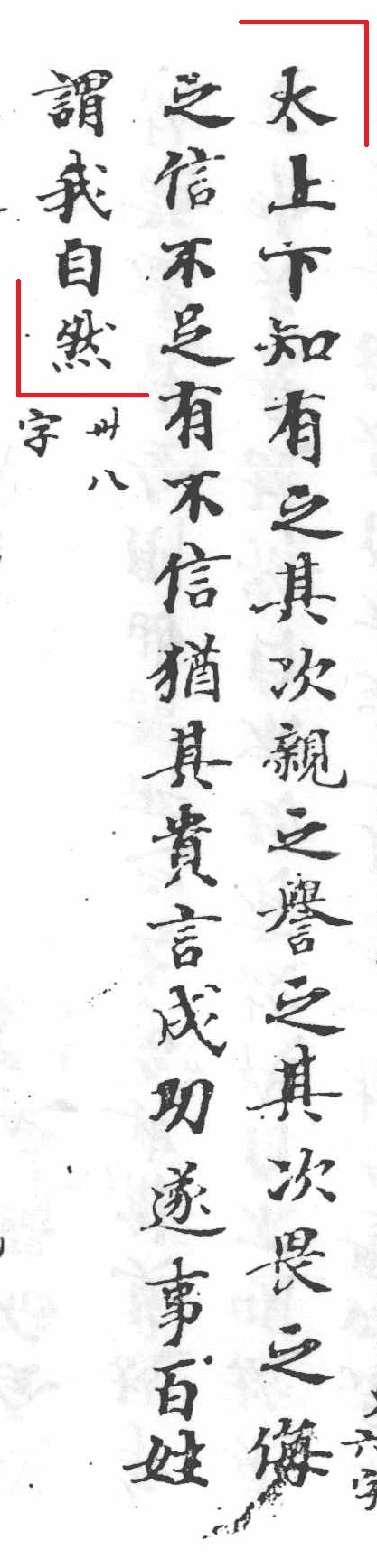
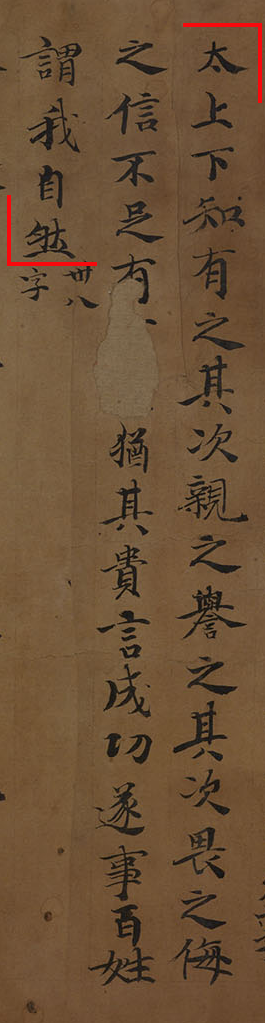
大上,下知有之。其次,親譽之。其次,畏之;其次,侮之。信不足,焉有不信。猷乎,其貴言也。成事遂功,而百姓曰我自然也。

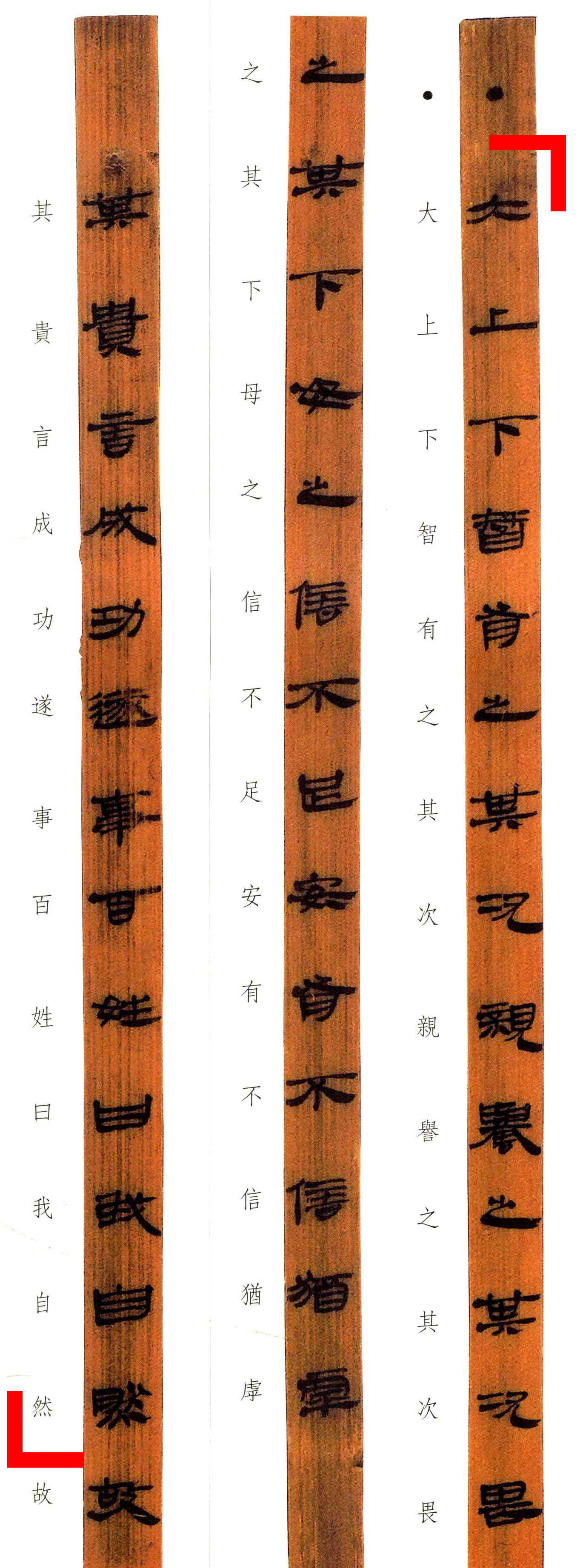
Mawangdui Laozi A

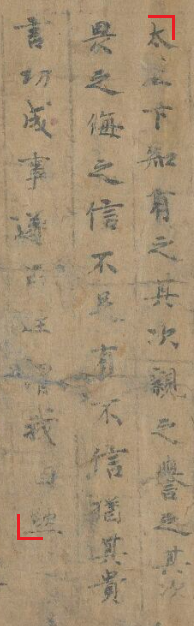
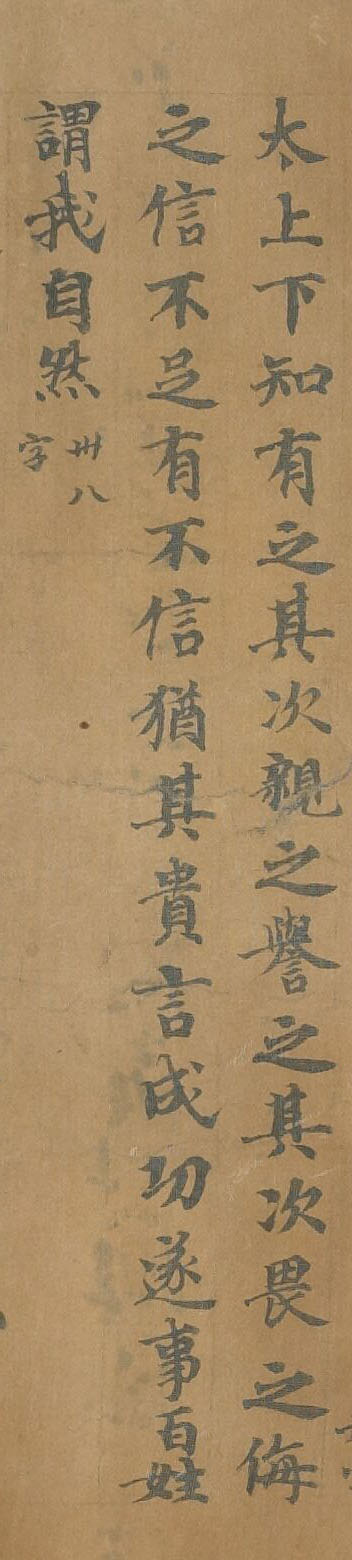
大上,下知有之;其次,親譽之;其次,畏之;其下,母之。信不足,案有不信。□□其貴言也。成功遂事而百省胃我自然。

Mawangdui Laozi B

大上,下知又□;其□,親譽之;其次,畏之;其下,母之。信不足,安有不信。猷呵其貴言也。成功遂事而百姓胃我自然。

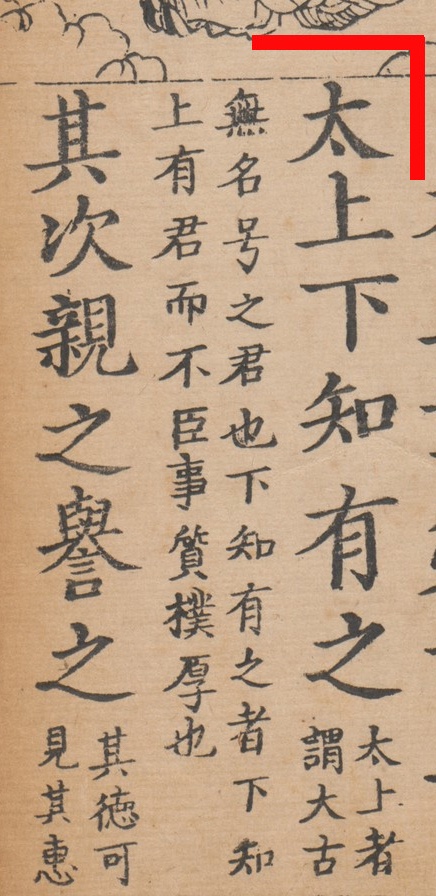
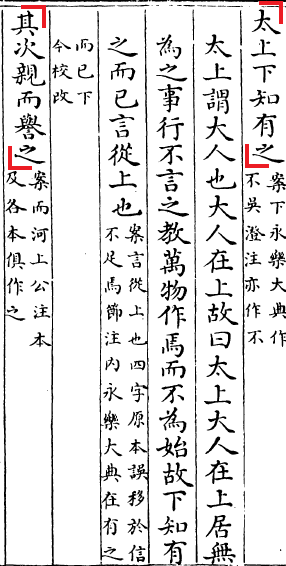
Wang Bi

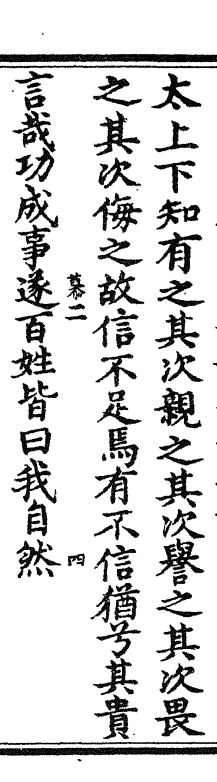
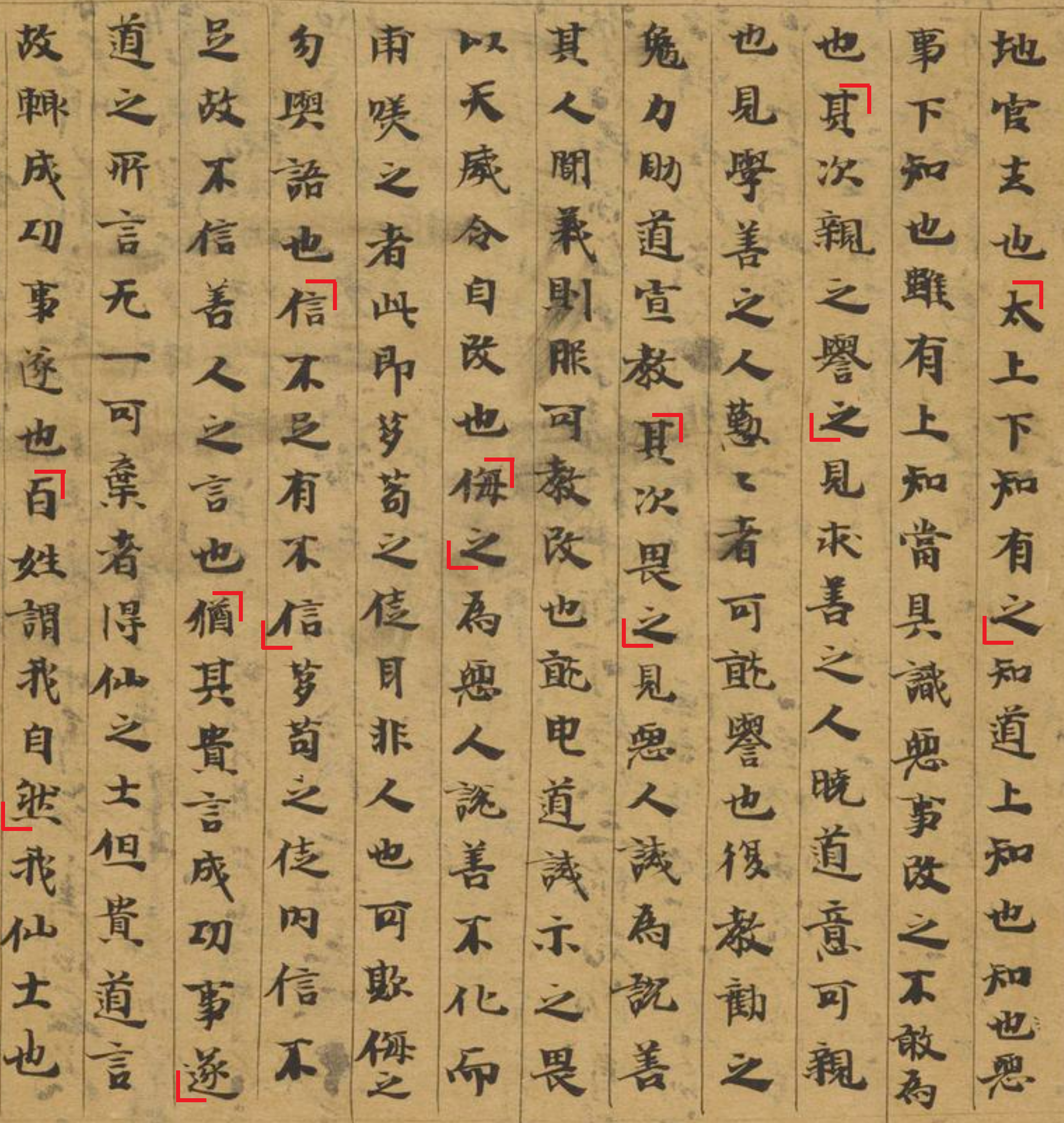
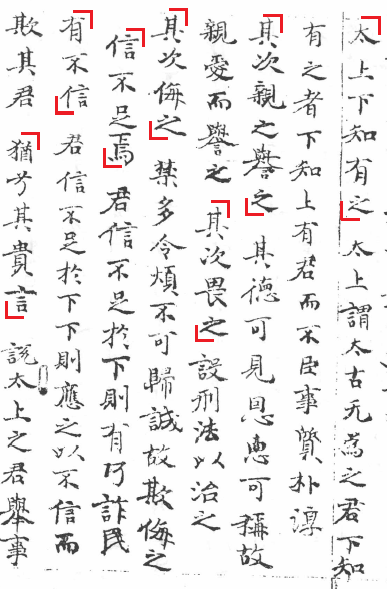
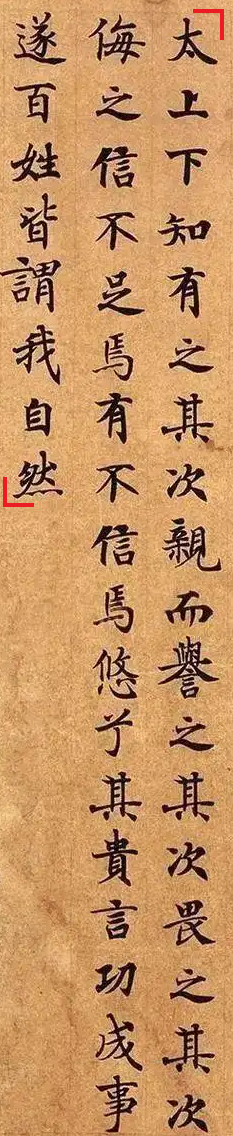
太上,下知有之;其次,親而譽之;其次,畏之;其次,侮之。信不足,焉有不信焉。悠兮,其貴言。功成事遂,百姓皆謂我自然。

Traductions

Stanislas Julien (1842)

Dans la haute antiquité, le peuple savait seulement qu’il avait des rois. Les suivants, il les aima et leur donna des louanges. Les suivants, il les craignit. Les suivants, il les méprisa. Celui qui n’a pas confiance dans les autres n’obtient pas leur confiance. (Les premiers) étaient graves et réservés dans leurs paroles. Après qu’ils avaient acquis des mérites et réussi dans leurs desseins, les cent familles disaient : Nous suivons notre nature.

Léon Wieger (1913)

A. Dans les premiers temps (quand, dans les choses humaines, tout était encore conforme à l’action du Principe), les sujets savaient à peine qu’ils avaient un prince (tant l’action de celui-ci était discrète). B. Plus tard le peuple aima et flatta le prince (à cause de ses bienfaits). Plus tard il le craignit (à cause de ses lois), et le méprisa (à cause de ses injustices). Il devint déloyal, pour avoir été traité déloyalement, et perdit confiance, ne recevant que de bonnes paroles non suivies d’effet. C. Combien délicate fut la touche des anciens souverains. Alors que tout prospérait grâce à leur administration, leur peuple s’imaginait avoir fait en tout sa propre volonté.

Autres traductions

Русский

Д.П. Кониси (1894)

Существует ли высочайшее бытие, я не знаю; но можно (духом) приблизиться к нему и воздавать ему хвалу, потом — бояться его, а затем — пренебрегать им. От недостатка веры происходит неверие. О, как медленны слова, произносимые с весом и со смыслом! Когда совершенны заслуги и сделаны подвиги, то все земледельцы скажут, что это достигнуто естественным ходом вещей.

Архим. Даниил (Сивиллов) (1828)

Уклонение от великого закона было причиною введения наказаний.

Во время глубокой древности, когда великий закон находился в полной силе, подданные знали, только, что над ними поставлен был царь, который обладал ими, но не имели нужды в мерах строгости, употребляемых правосудием; ибо и царь, и подданные свободно тогда исполняли свои обязанности без всяких посторонних побуждений.

Л.Н. Толстой (1910)

Если сам себе не веришь, то и тебе никто не поверит.
English

Paul Carus (1913)

SIMPLICITY IN HABITS.

1. Of great rulers the subjects do not notice the existence. To lesser ones people are attached; they praise them. Still lesser ones people fear, and the meanest ones people despise. 2. For it is said: "If your faith be insufficient, verily, you will receive no faith." 3. How reluctantly they [the great rulers] considered their words! Merit they accomplished; deeds they performed; and the hundred families thought: "We are independent."

John Chalmers (1868)

Genuineness

In the highest antiquity people knew only of the existence of their superiors. In the next (age) they became attached to them, and flattered them. In the next they dreaded them. In the next they despised them. For where faith is insufficient, it is not met by faith. How cautious they (the ancient sages) were in weighing their words! When they had completed a meritorious work, and affairs were prosperous, the people all (unconscious) said, “We are just as we are naturally.”

James Legge (1891)

The Unadulterated Influence

In the highest antiquity, (the people) did not know that there were (their rulers). In the next age they loved them and praised them. In the next they feared them; in the next they despised them. Thus it was that when faith (in the Tao) was deficient (in the rulers) a want of faith in them ensued (in the people). How irresolute did those (earliest rulers) appear, showing (by their reticence) the importance which they set upon their words! Their work was done and their undertakings were successful, while the people all said, 'We are as we are, of ourselves!'
Deutsch

Reinhold von Plaenckner (1870)

Das höchste Wesen! O! die niedern Menschen wissen eben nur, dass es ein solches gibt. Manch andere allerdings nähern sich ihm, lieben, loben und preisen es. Andere fürchten es. Wieder andere verachten und verspotten es. Denn wo der Glaube nicht ausreicht, da ist kein Glaube. Dazu kommt leider noch, dass ihnen die Höhern und Gebildetern selbst sagen: „Euer Verdienst ist vollständig, wenn ihr euerm Berufe nachgeht, euere Geschäfte verrichtet; bleibe jeder bei seinem Stande." So sagen denn die Menschen gemeiniglich: „Wir haben an uns selbst genug, und für uns selbst genug zu sorgen."

Victor von Strauß (1870)

Bei den grossen Königen wussten die Unterthanen, sie hätten sie. Deren Nachfolger liebten und lobten sie. Deren Nachfolger fürchteten sie. Deren Nachfolger verachteten sie. Vertraut man nicht genug, erhält man kein Vertrauen. Wie vorsichtig ihre kostbaren Worte! Verdienstliches ward vollbracht, Unternehmungen gelangen, und alle hundert Geschlechter sagten: wir sind frei.

Richard Wilhelm (1911)

Reinheit des Wirkens

Herrscht ein ganz Großer, so weiß das Volk nur eben, daß er da ist. Mindere werden geliebt und gelobt, noch Mindere werden gefürchtet, noch Mindere werden mißachtet. Vertraut man nicht genug, so findet man kein Vertrauen. Wie überlegt waren jene im Werten ihrer Worte! Die Werke wurden vollbracht, die Arbeit wurde getan, und die Leute im Volk dachten alle: „Wir sind selbständig.“

Sources disponibles