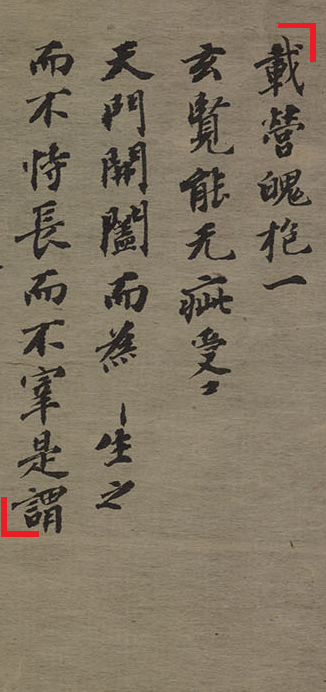
Originaltexte

Mawangdui Laozi A

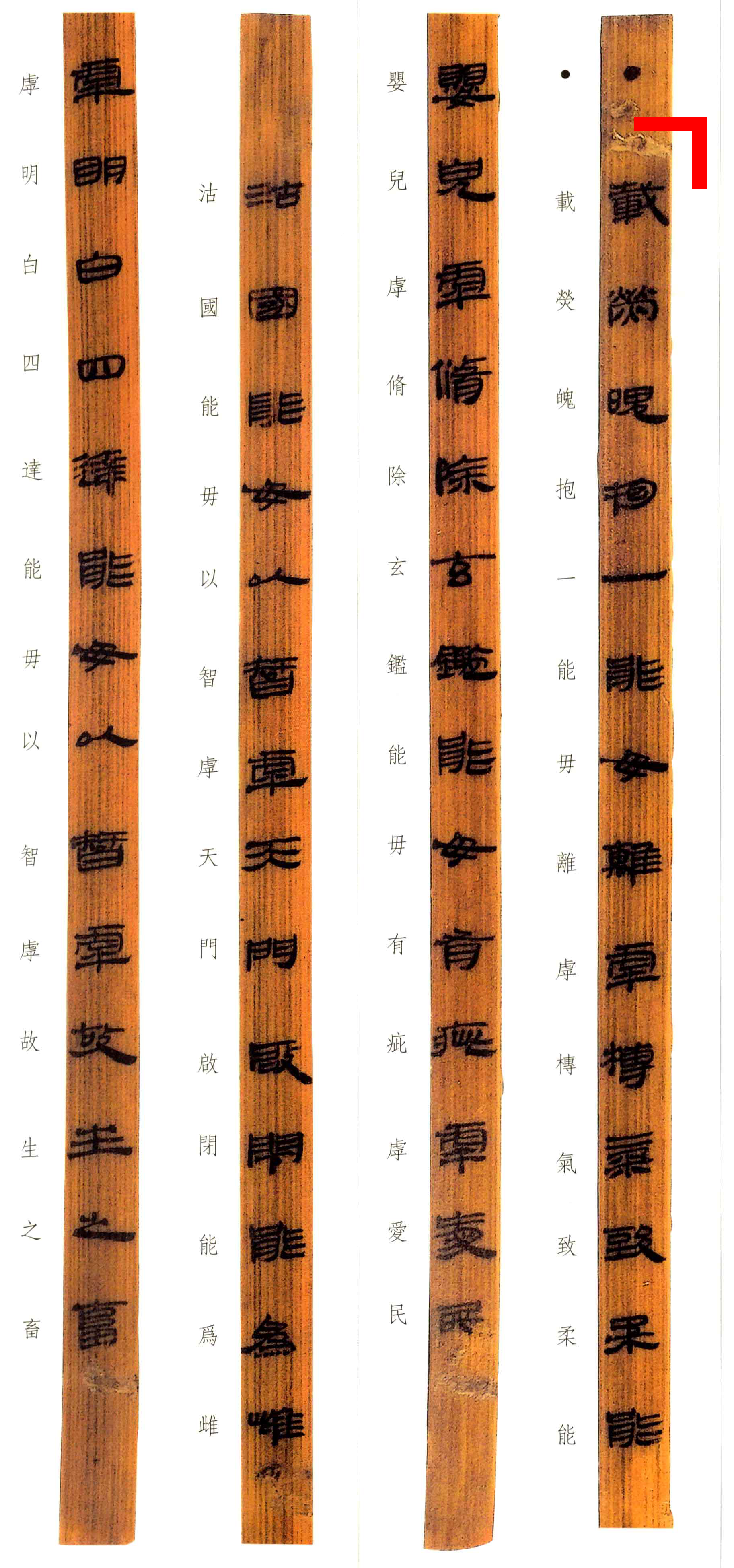
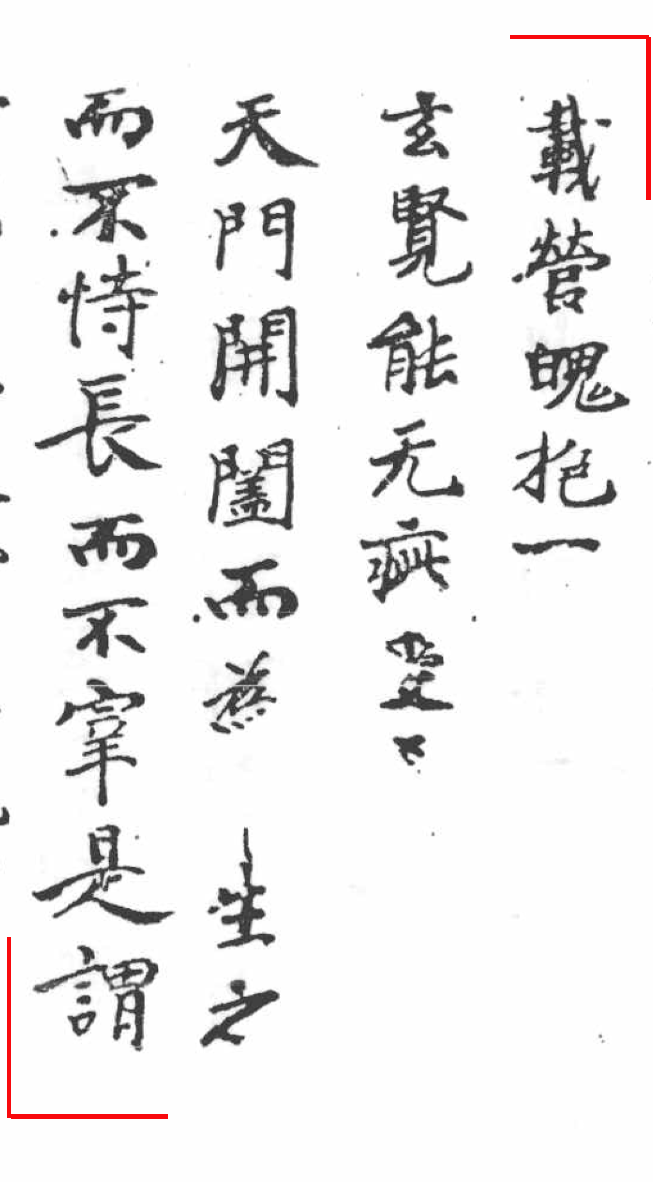
□□□□□□□□□□□□□能嬰兒乎?脩除玄藍,能毌疵乎?愛□□□□□□□□□□□□□□□□□□□□□□□□□生之、畜之,生而弗□□□□□□□□德。

Mawangdui Laozi B

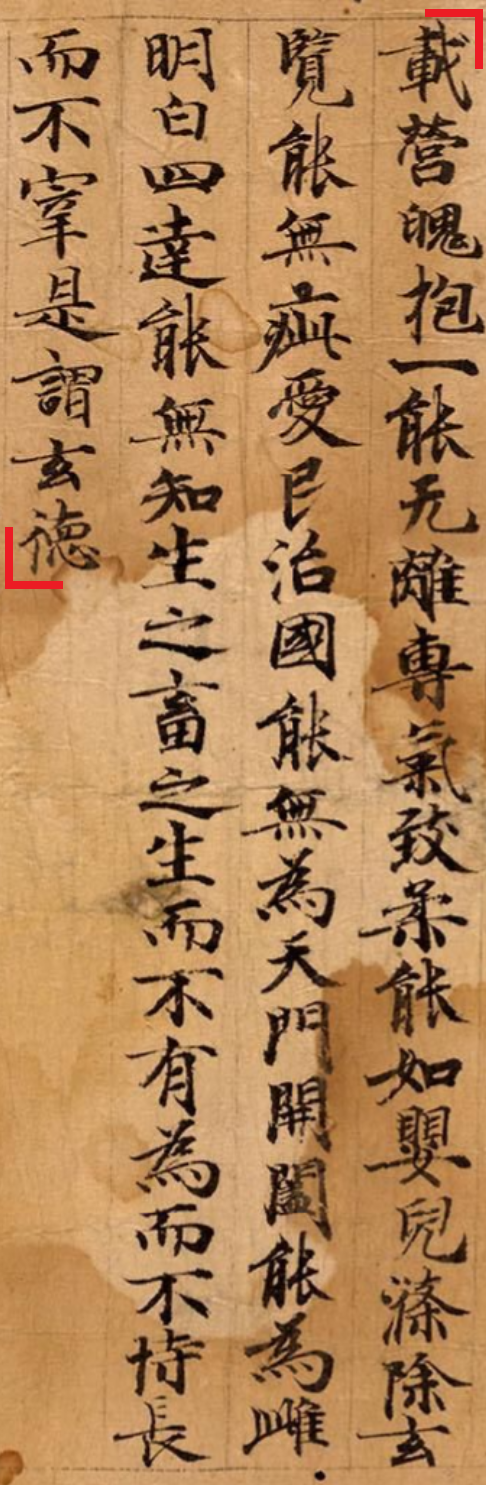
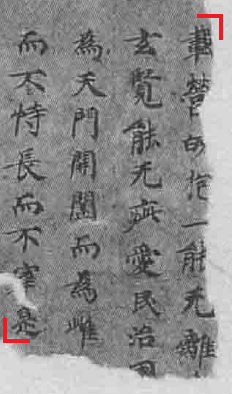
戴營魄抱一,能毌離乎?專氣至柔,能嬰兒乎?脩除玄監,能毌有疵乎?愛民栝國,能毌以知乎?天門啟闔,能為雌乎?明白四達,能毌以知乎?生之、畜之,生而弗有,長而弗宰也,是胃玄德。

Wang Bi

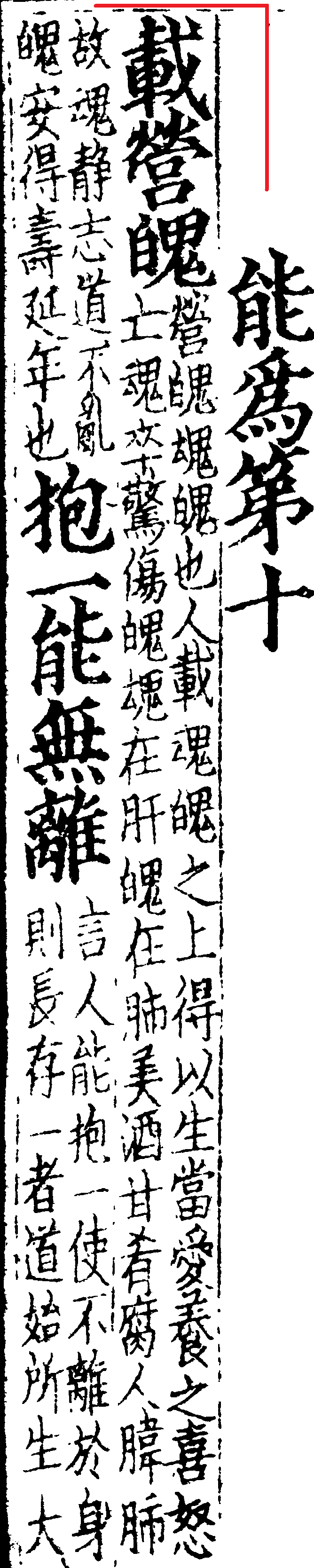
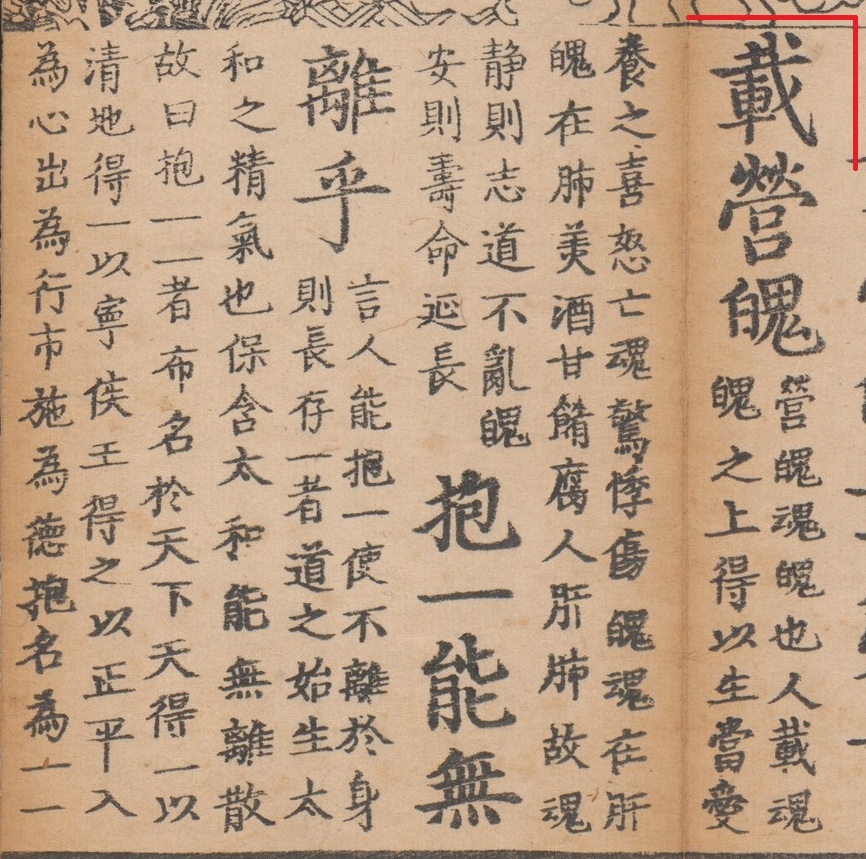
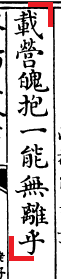
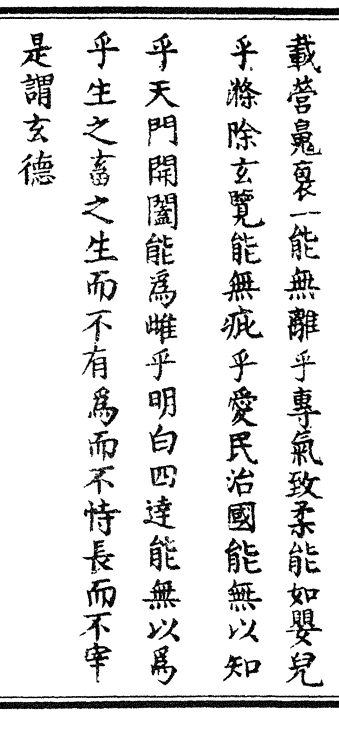
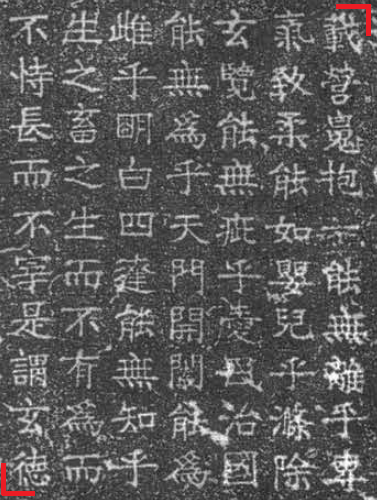
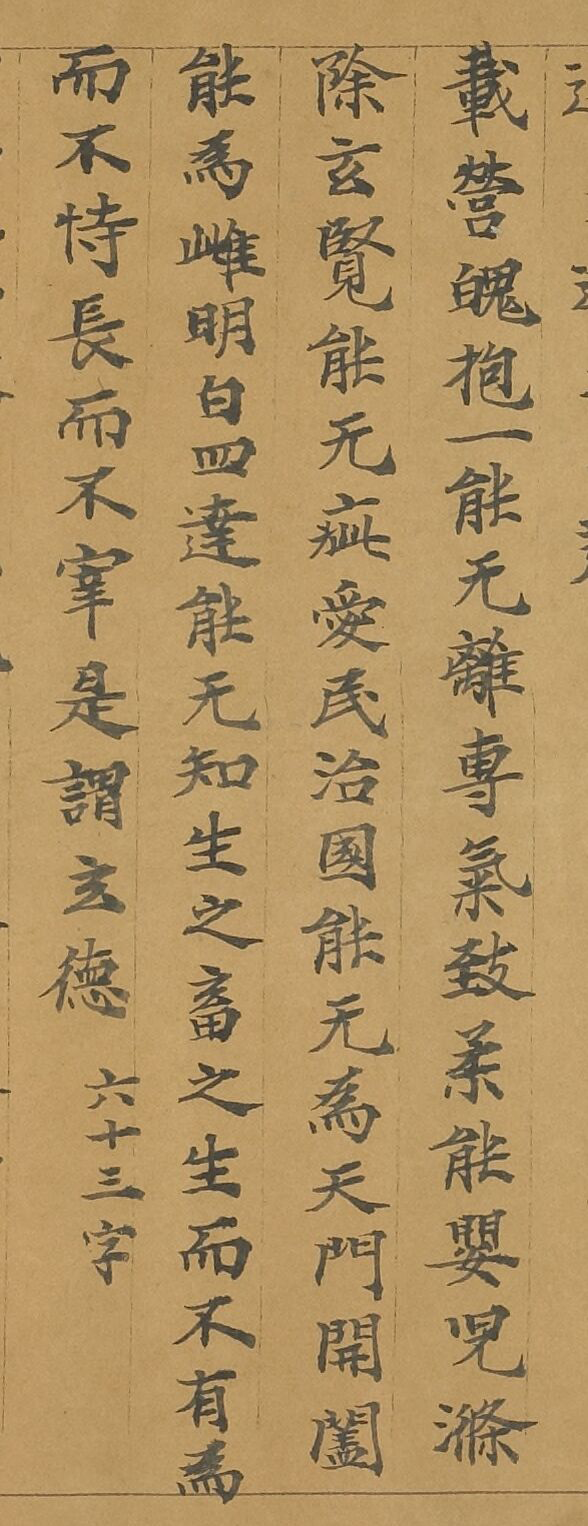
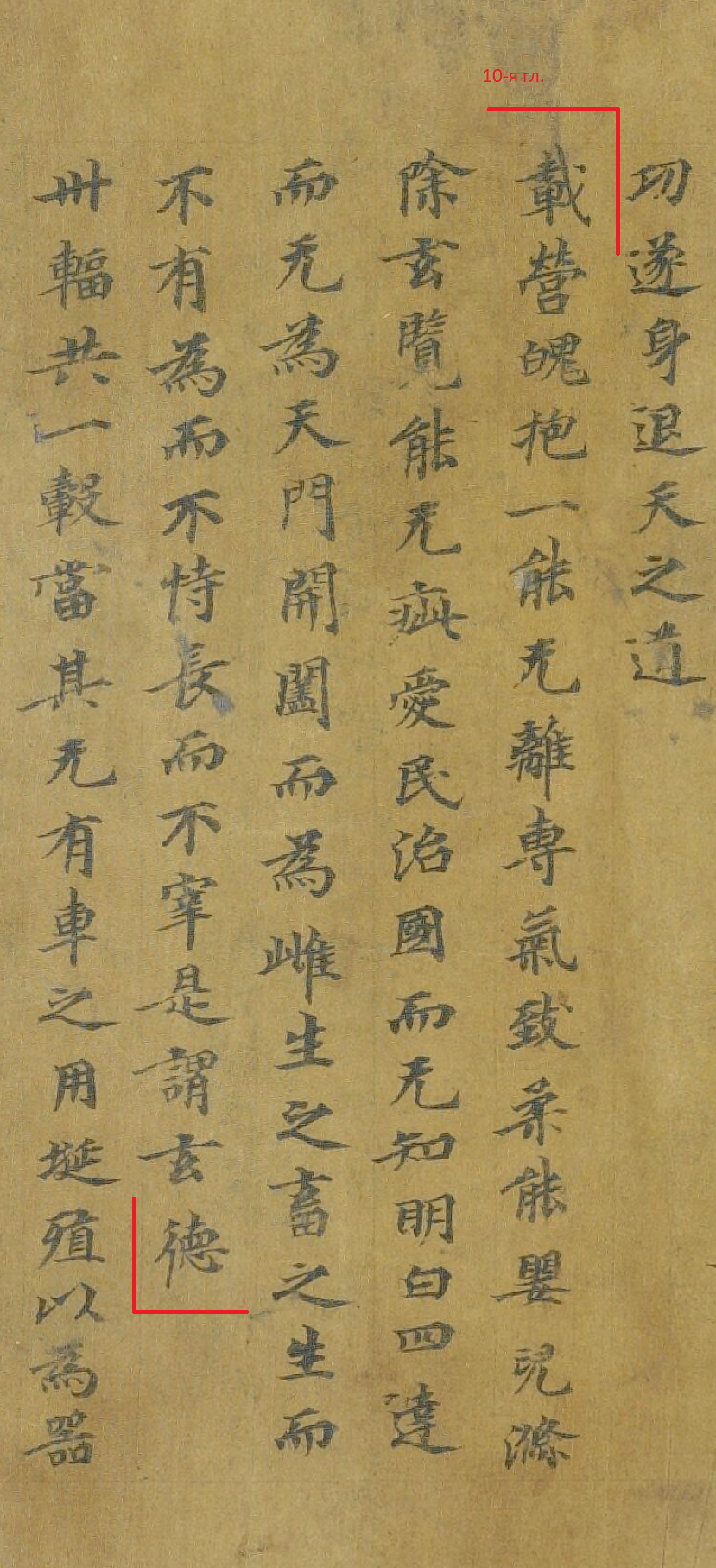
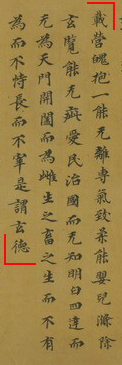
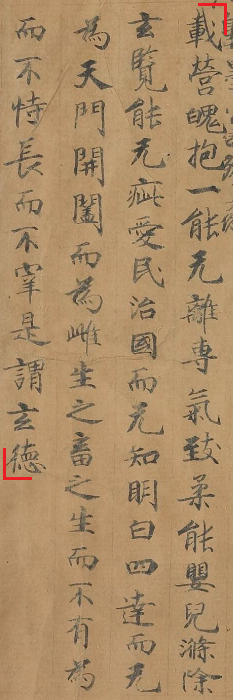
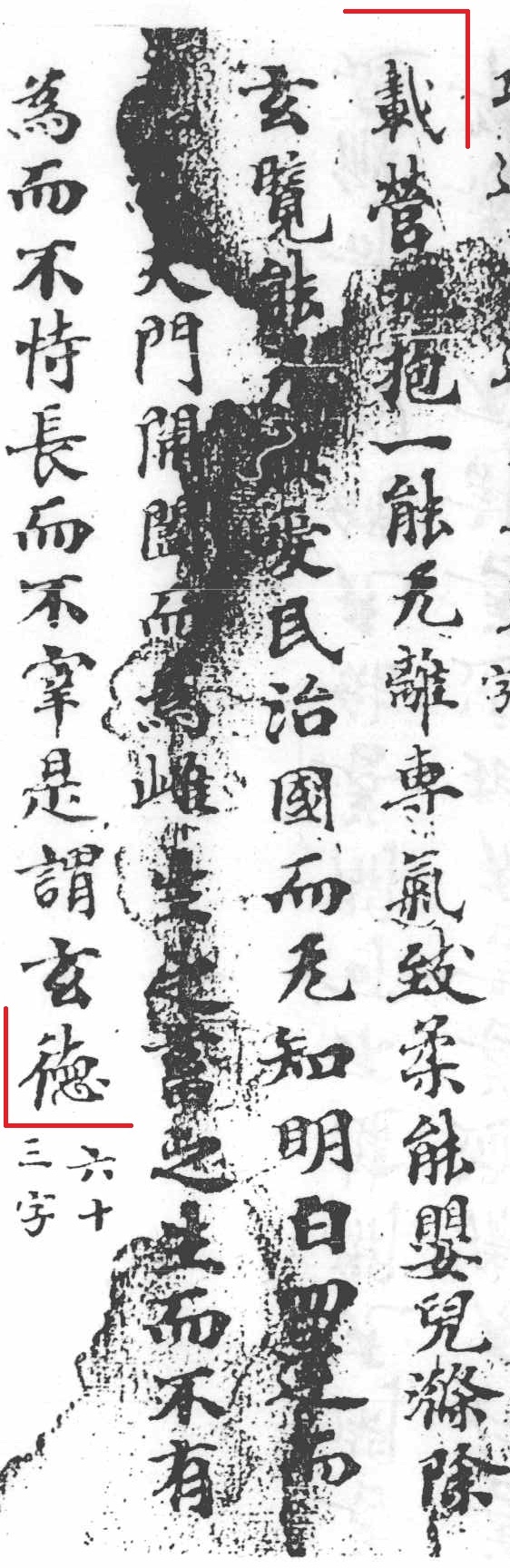
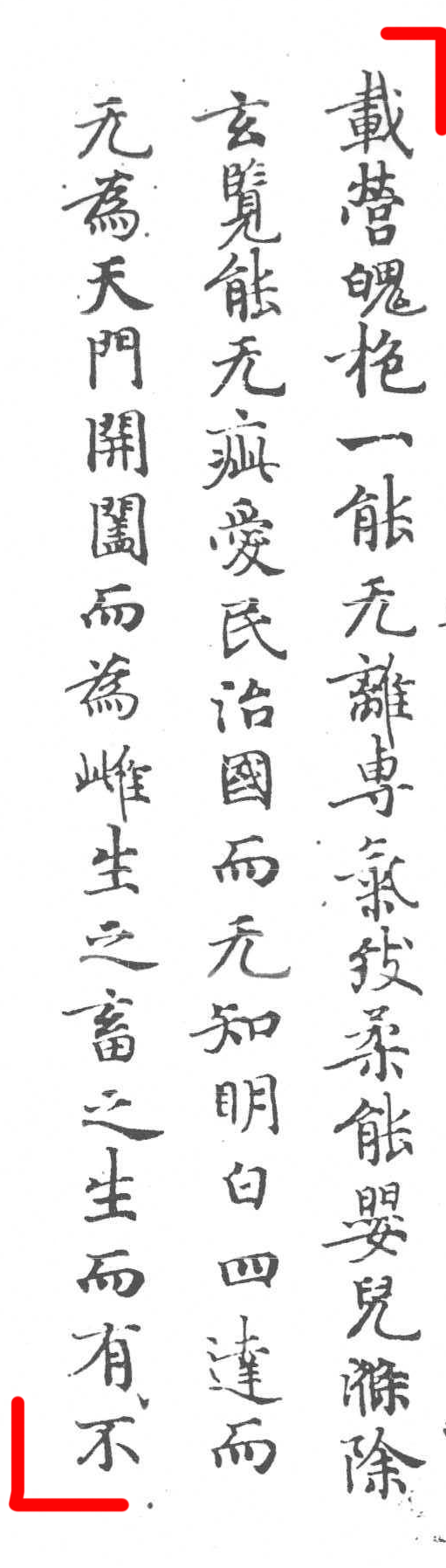
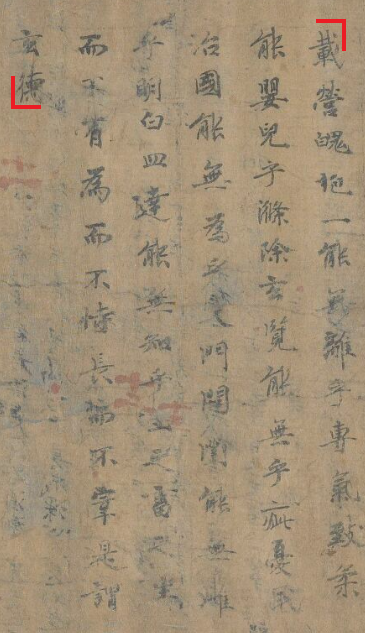
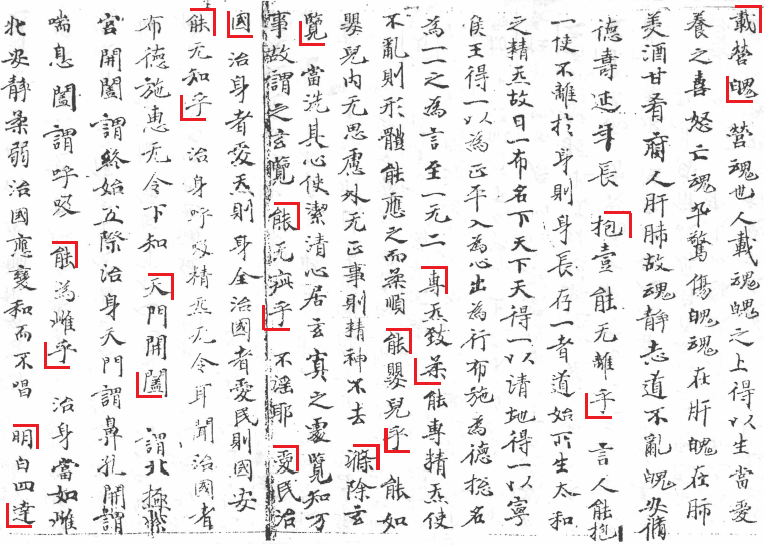
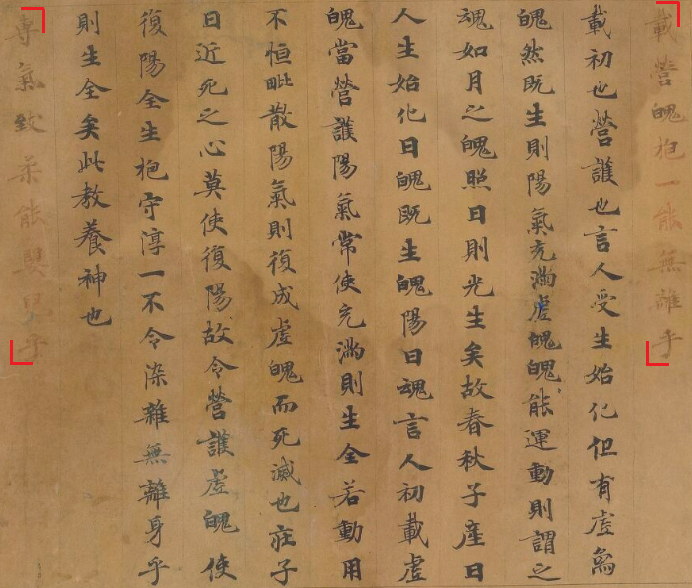
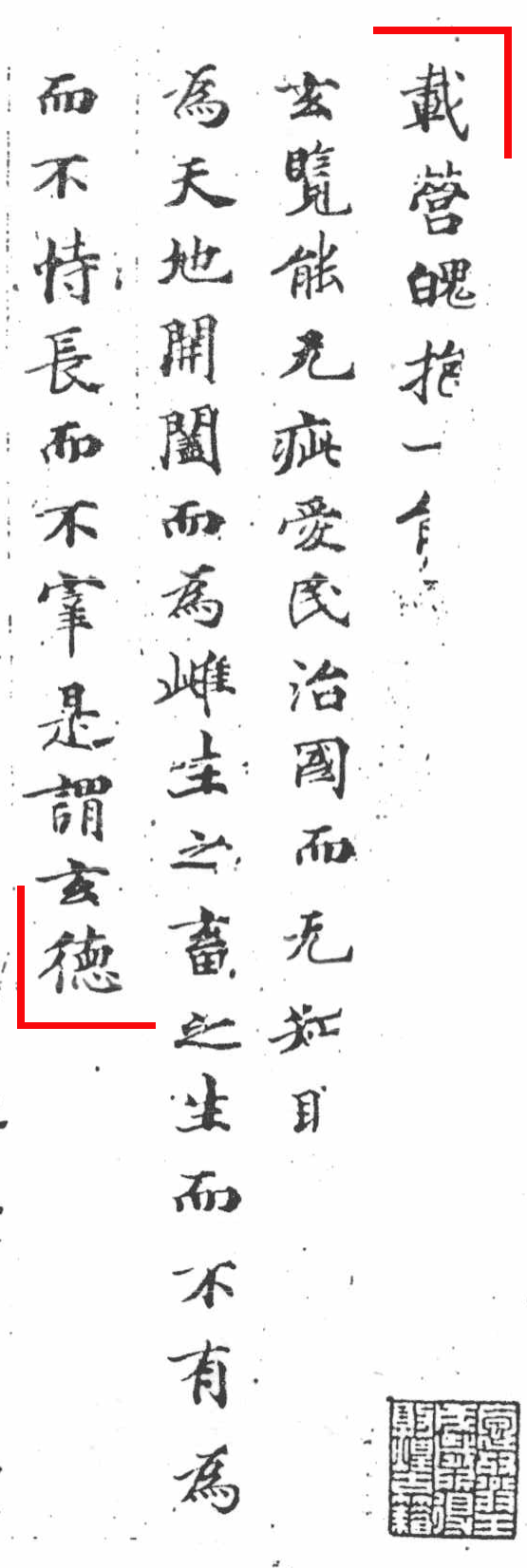
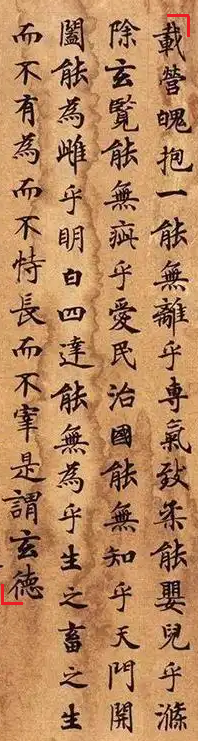
載營魄抱一,能無離乎?專氣致柔,能嬰兒乎?滌除玄覽,能無疵乎?愛民治國,能無知乎?天門開闔,能為雌乎?明白四達,能無知乎?生之、畜之,生而不有,為而不恃,長而不宰,是謂玄德。

Übersetzungen

Reinhold von Plaenckner (1870)

Vor allem und mit aller geistigen Kraft muss man danach streben, dass das reinere und bessere geistige Selbst — Vernunft und Willenskraft — das weniger gute und weniger reine Begehren so in seine Gewalt bekomme, dass das Selbst ein einiges, harmonisches, untheilbares Ganze werde. Man muss mit aller Anstrengung, Aufmerksamkeit und Besonnenheit, mit Aufbietung aller moralischen Kraft die höchste Feinheit und Reinheit zu gewinnen suchen, sodass die Seele so klar und rein werde wie die eines neugebornen Kindes. Wenn man so geläutert ist und alle Schlacken entfernt hat, kann man das Erhabene erschauen, denn man hat keine Gebrechen mehr. Wer nun mit reiner Seele die Menschheit liebend umfasst und überallhin Segen bringt, der wird das Immaterielle, das geistige Wesen ergründen können. Er wird die Himmelsthore öffnen und schliessen, er wird die geheimen Werkstätten der Natur belauschen können. Vollständig klar und deutlich blickt der nach allen Seiten hin, dem die Fähigkeit der Erkenntniss des Immateriellen gegeben ist. Er lässt es entstehen, er verarbeitet es mit dem Verstande. Er erwirbt es, ohne dadurch positiven Besitz erlangen zu wollen. Er bildet es, freilich ohne eine materielle Stütze zu erhalten. Er lässt es entstehen, aber ohne dass er Eigenthümer wird. Dies nennt man die tiefste Weltweisheit und die sittliche Vollkommenheit.

Victor von Strauß (1870)

Wer dem Geist die Seele einergiebt und Einheit umfängt, kann ungetheilt seyn. Bezwingt er das Seelische bis zur Nachgiebigkeit, kann er wie ein Kindlein seyn. Reinigt und öffnet er den tiefen Blick, kann er ohne Schwachheit seyn. Liebt er das Volk und regiert er das Land, kann er ohne Thun seyn. Die Himmelspforten öffnen sich oder schliessen sich, er kann das Vogelweibchen seyn. Lichthell Alles durchdringend, kann er unwissend seyn. Er belebt und ernährt; belebt und hat nicht, thut und giebt nichts drauf, erhält und beherrscht nicht. Das heisst tiefe Tugend.

Richard Wilhelm (1911)

Möglichkeiten

Wer leuchtend seinen Geist bewahrt, daß er Eines nur umfängt, der mag wohl innern Zwiespalt vermeiden. Wer seine Seele einfältig macht und demütig, der mag wohl werden wie ein Kindlein. Wer reinigt und läutert sein inneres Schauen, der mag wohl seiner Fehler ledig werden. Wer seine Leute liebt als Herrscher des Reichs, der mag wohl ohne Handeln wirken können. Wenn des Himmels Pforten sich öffnen und schließen, so mag er wohl rein empfangend sein. Wer mit klarem Blicke alles durchdringt, der mag wohl ohne Kenntnisse bleiben. Erzeugen und ernähren, erzeugen und nicht besitzen: wirken und nicht behalten, mehren und nicht beherrschen: Das ist geheimes LEBEN.

Weitere Übersetzungen

Русский

Д.П. Кониси (1894)

Душа имеет единство, поэтому она не делится (на части). Кто вполне духовен, тот бывает смирен, как младенец. Кто свободен от всякого рода знаний, тот никогда не будет болеть. Кто любит народ и управляет им, тот должен быть бездеятельным. Кто хочет открыть небесные ворота, тот должен быть, как самка. Кто делает вид, что много знает и ко всему способен, тот ничего не знает и ни к чему не способен. Кто производит (вещь) и постоянно держит ее, тот ничего не имеет. Не хвалиться тем, что сделано, не начальствовать над другими, превосходя их, называется небесною добродетелью.

Архим. Даниил (Сивиллов) (1828)

Черты высокой и сокровенной добродетели.

Всякий из нас имеет в себе разумную и чувственную душу. Хотя сия душа в существе своем одна и неразделена, однако ж можно ли допустить, чтобы она никогда разлучалась от тела? Находясь в зрелых летах, хотя мы употребили все усилия на то, чтобы жизненным лам возвратить прежнюю нежность, однако ж можем ли мы привести себя в такую свежесть, какою цветет тело младенца? Хотя бы мы совершенно успели очистить свои высокопарные умствования от всякой лжи и предрассудков, можем ли, однако ж, похвалиться, чтобы мы были совершенно свободны от недостатков? Можем ли любить народ с такою горячностью и управлять Государством с таким искусством, чтобы, ничего не делая, мы успели сделать все, что к благосостоянию его относится? Если двери небесные отверзаются и заключаются сами о себе, то можно ли нам присвоять чужую честь и считать себя виновниками бытия тварей? Если мы с такою ясностью понимаем предметы, нас окружающие, то простительно ли нам, чтобы мы в отношении к Творческой силе казались совершенными невеждами. Мы знаем, что природа употребляет труд в произведении вещей, что всем тварям она дает жизнь и питательность, однако ж пребывает в таком спокойствии, что как будто бы она ни в чем не трудилась, ничего не делала; беспрестанно трудится и действует, но трудами своими она не превозносится; является как бы недвижною, но все приводит в движение и всем управляет. Сие-то значит обладать высоким и сокровенным совершенством.
English

Paul Carus (1913)

WHAT CAN BE DONE?

1. Who by unending discipline of the senses embraces unity cannot be disintegrated. By concentrating his vitality and inducing tenderness he can become like a little child. By purifying, by cleansing and profound intuition he can be free from faults. 2. Who loves the people when administering the country will practise nonassertion. Opening and closing the gates of heaven, he will be like a mother-bird; bright, and white, and penetrating the four quarters, he will be unsophisticated. He quickens them and feeds them. He quickens but owns not. He acts but claims not. He excels but rules not. This is called profound virtue.

John Chalmers (1868)

What may be done

By husbanding the animal and spiritual souls, and embracing unity, it is possible to prevent their separation. By undivided attention to the passion-nature, and increasing tenderness, it is possible to be a little child. By putting away impurity from the hidden eye of the heart, it is possible to be without spot. By loving the people, and so governing the nation, it is possible to be unknown. In opening and shutting the heavenly doors (the mouth, the nostrils, etc.), it is possible to have no creaking. One may be bright and transparent on all sides, and yet be unknown. To produce and to nourish, to produce and have not, to act and expect not, to enlarge and cut not off, — this is called sublime virtue.

James Legge (1891)

Possibilities through the Tao

When the intelligent and animal souls are held together in one embrace, they can be kept from separating. When one gives undivided attention to the (vital) breath, and brings it to the utmost degree of pliancy, he can become as a (tender) babe. When he has cleansed away the most mysterious sights (of his imagination), he can become without a flaw. In loving the people and ruling the state, cannot he proceed without any (purpose of) action? In the opening and shutting of his gates of heaven, cannot he do so as a female bird? While his intelligence reaches in every direction, cannot he (appear to) be without knowledge? (The Tao) produces (all things) and nourishes them; it produces them and does not claim them as its own; it does all, and yet does not boast of it; it presides over all, and yet does not control them. This is what is called 'The mysterious Quality' (of the Tao).
Français

Stanislas Julien (1842)

L’âme spirituelle doit commander à l’âme sensitive. Si l’homme conserve l’unité, elles pourront rester indissolubles. S’il dompte sa force vitale et la rend extrêmement souple, il pourra être comme un nouveau-né. S’il se délivre des lumières de l’intelligence il pourra être exempt de toute infirmité (morale). S’il chérit le peuple et procure la paix au royaume, il pourra pratiquer le non-agir. S’il laisse les portes du ciel s’ouvrir et se fermer, il pourra être comme la femelle (c’est-à-dire rester en repos). Si ses lumières pénètrent en tous lieux, il pourra paraître ignorant. Il produit les êtres et les nourrit. Il les produit et ne les regarde pas comme sa propriété. Il leur fait du bien et ne compte pas sur eux. Il règne sur eux et ne les traite pas en maître. C’est ce qu’on appelle posséder une vertu profonde.

Léon Wieger (1913)

A. Faire que le corps, et l’âme spermatique, étroitement unis, ne se séparent pas. B. S’appliquer à ce que l’air inspiré, converti en âme aérienne, anime ce composé, et le conserve intact comme l’enfant qui vient de naître. C. S’abstenir des considérations trop profondes, pour ne pas s’user. D. En fait d’amour du peuple et de sollicitude pour l’État, se borner à ne pas agir. E. Laisser les portes du ciel s’ouvrir et se fermer, sans vouloir produire soi-même, sans s’ingérer. F. Tout savoir, être informé de tout, et pourtant rester indifférent comme si on ne savait rien. G. Produire, élever, sans faire sien ce qu’on a produit, sans exiger de retour pour son action, sans s’imposer à ceux qu’on gouverne. Voilà la formule de l’action transcendante.

Verfügbare Quellen