Textes originaux

Mawangdui Laozi A

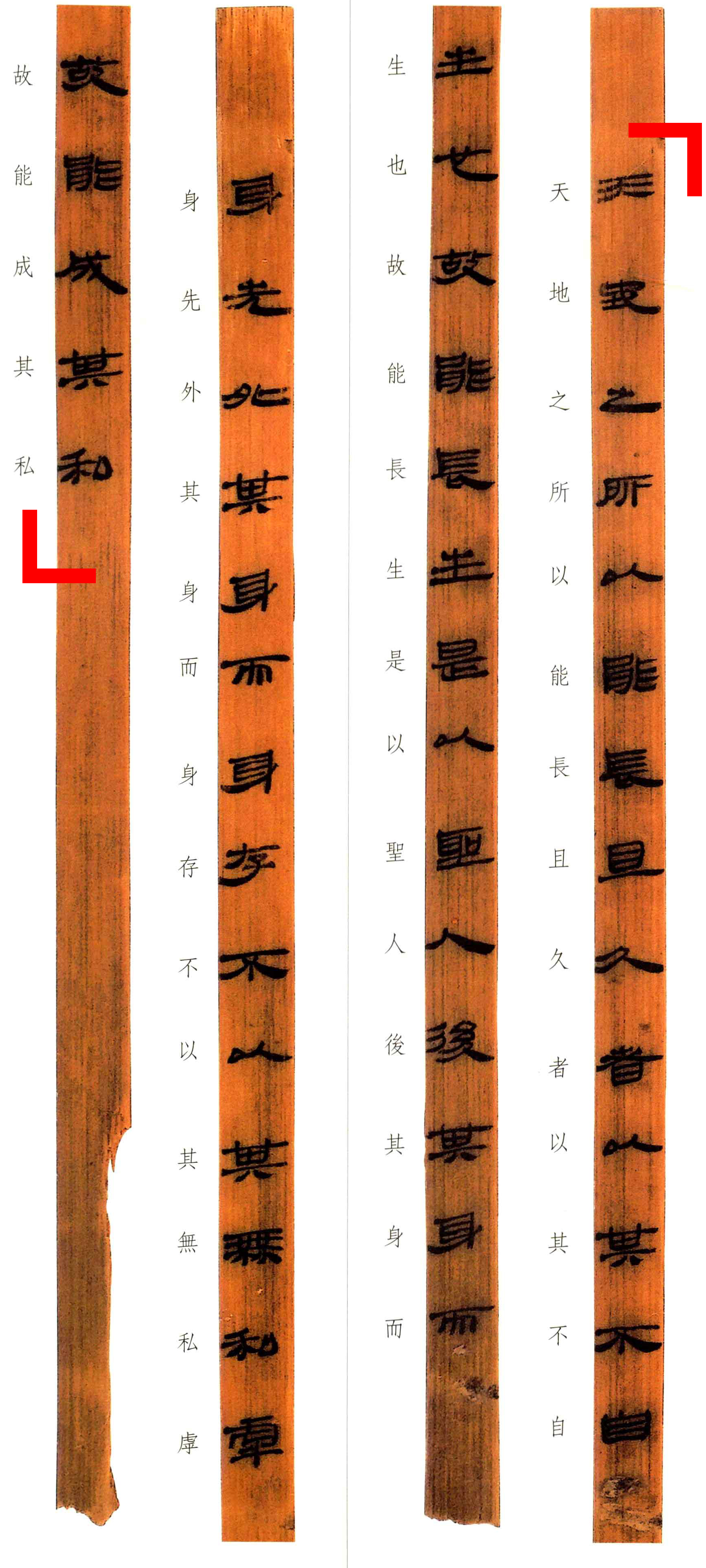
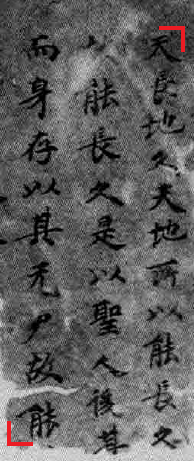
天長地久。天地之所以能□且久者,以其不自生也,故能長生。是以聲人芮其身而身先;外其身而身存。不以其無□輿?故能成其私。

Mawangdui Laozi B

天長地久。天地之所以能長且久者,以其不自生也,故能長生。是以聖人退其身而身先,外其身而身先,外其身而身存,不以其無私輿,故能成其私。

Wang Bi

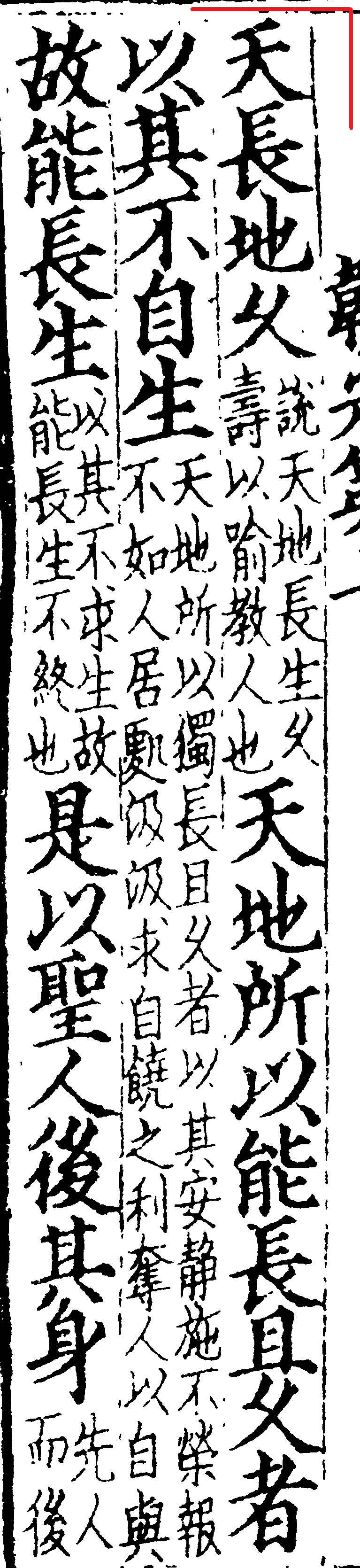
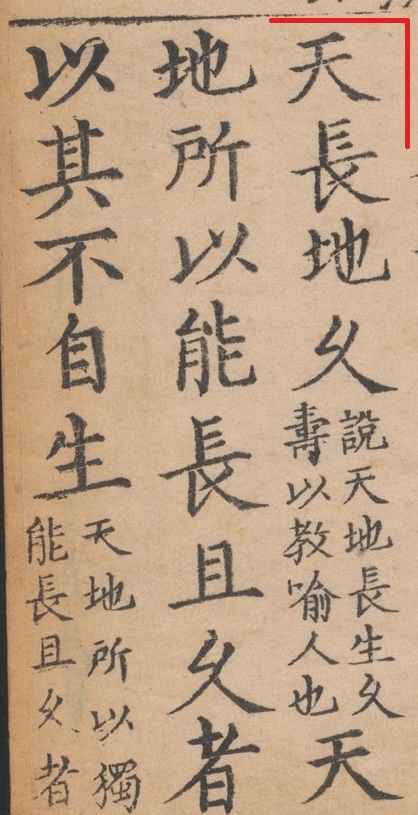
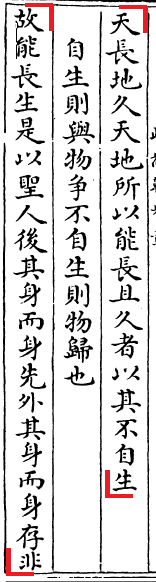
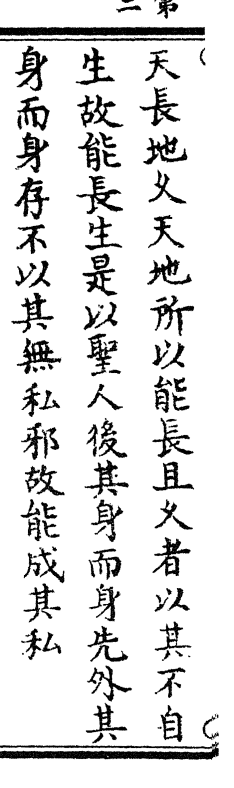
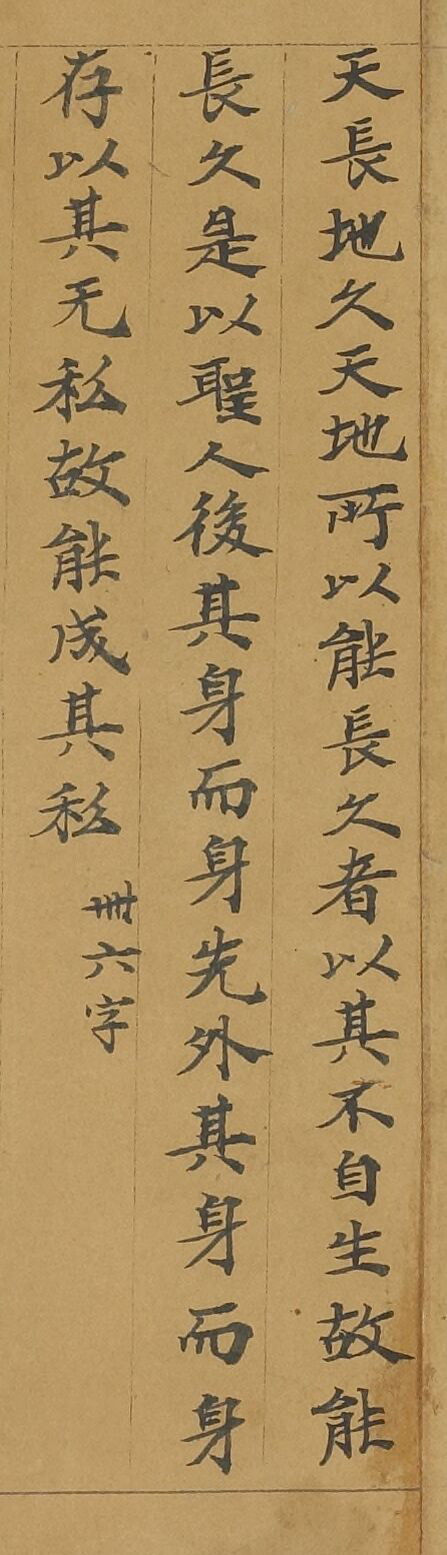
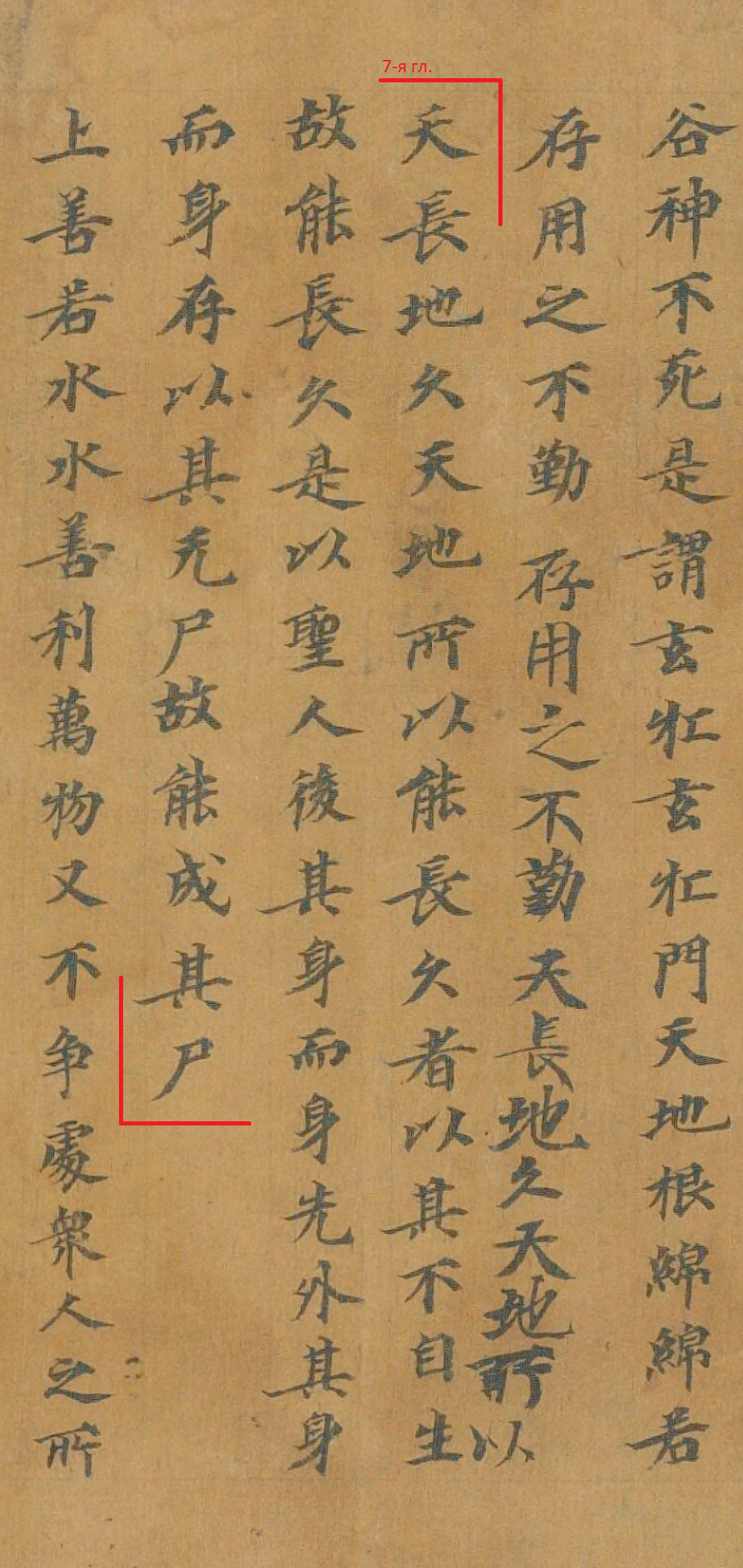
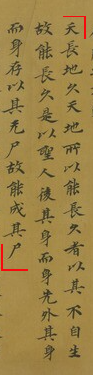
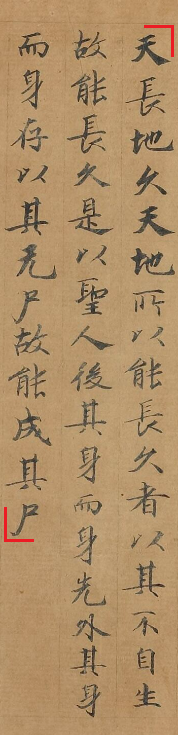
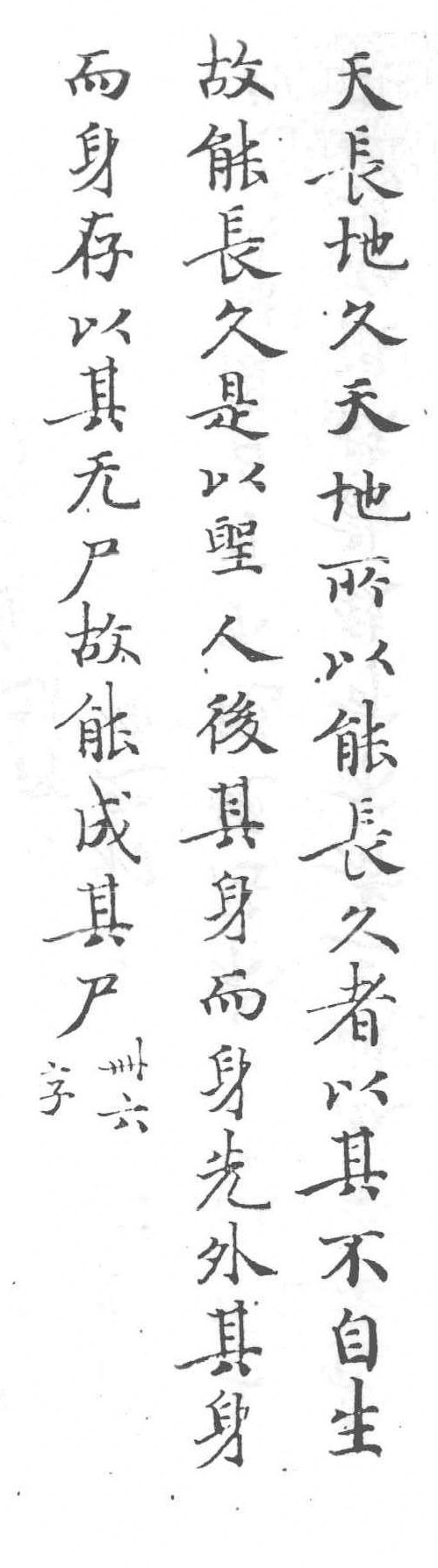
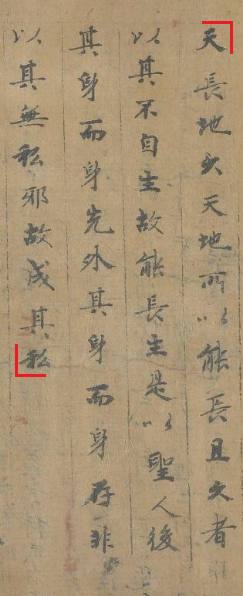
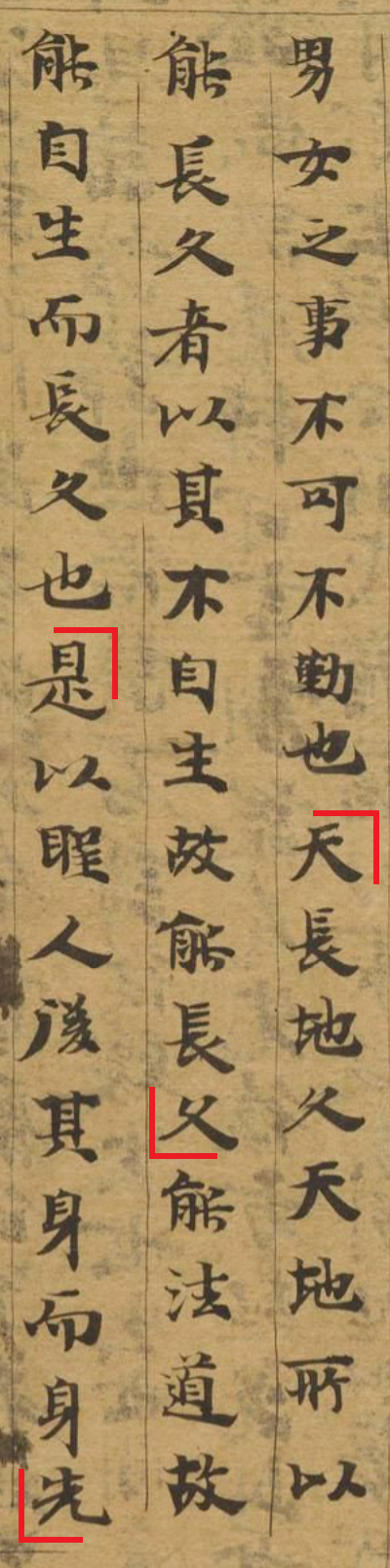
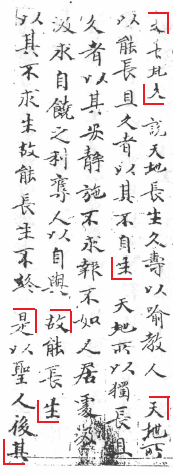
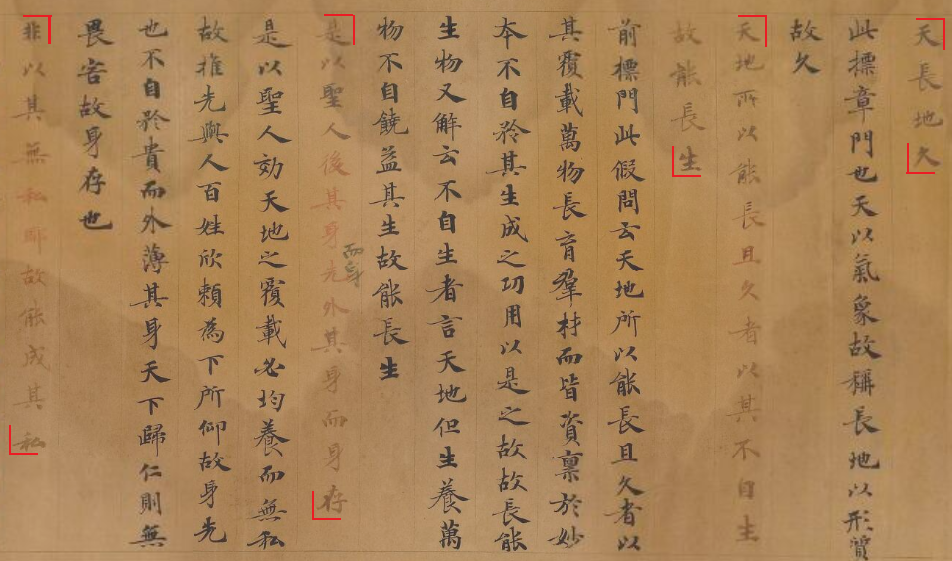
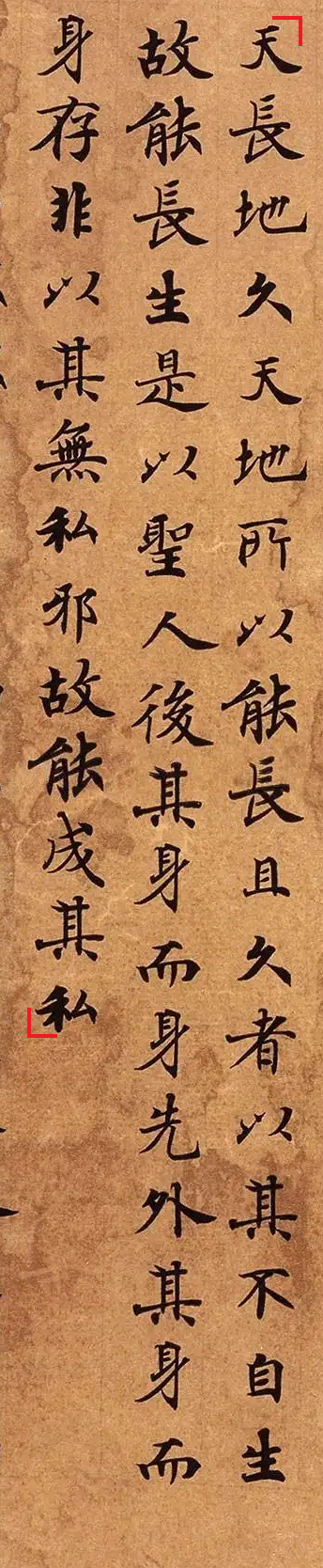
天長地久。天地所以能長且久者,以其不自生,故能長生。是以聖人後其身而身先;外其身而身存。非以其無私耶?故能成其私。

Traductions

Stanislas Julien (1842)

Le ciel et la terre ont une durée éternelle. S’ils peuvent avoir une durée éternelle, c’est parce qu’ils ne vivent pas pour eux seuls. C’est pourquoi ils peuvent avoir une durée éternelle. De là vient que le saint homme se met après les autres, et il devient le premier. Il se dégage de son corps, et son corps se conserve. N’est-ce pas parce qu’il n’a point d’intérêts privés ? C’est pourquoi il peut réussir dans ses intérêts privés.

Léon Wieger (1913)

A. Si le ciel et la terre durent toujours, c’est qu’ils ne vivent pas pour eux-mêmes. B. Suivant cet exemple, le Sage, en reculant, s’avance ; en se négligeant, il se conserve. Comme il ne cherche pas son avantage, tout tourne à son avantage.

Autres traductions

Русский

Д.П. Кониси (1894)

Небо и земля вечны. Причина того, что небо и земля вечны, заключается в том, что они существуют не для самих себя. Вот почему они вечны. Святой муж заботится о себе после других, поэтому он легко достигает безопасности. Он оставляет свое тело без всякой заботы, поэтому он будет жить долго. Кто не заботится о себе, тот весьма удачно совершит и свое личное дело.

Архим. Даниил (Сивиллов) (1828)

Ничто так долго не сохраняет бытия своего в мире, как небо и земля. А что они так долго сохраняют бытие свое, это происходит от того, что они не заботятся о своей долговременности; отсюда-то они получают неистощимую силу к столь долгому сохранению своего бытия. Подобным образом и мудрый, хотя попечение о своем теле, считает для себя делом не слишком важным, несмотря на то, он крепостью телесных сил превосходит многих других; хотя всякую заботу о сбережении телесного здравия он ставит ни во что, однако ж тело его от того не разрушается смертью, но цветет полнотою жизни. Это, впрочем, не то значит, чтобы мудрый из своего беспристрастия к долговременной жизни мог составить для себя то странное, или косвенное пристрастие к долговременной жизни, которое сопряжено с большею опасностью для человека, чем самое прямое пристрастие.

Л.Н. Толстой (1910)

Мудрый отрешается от самого себя и этим самым достигает всего, потому что ничего не признает своим.
English

Paul Carus (1913)

DIMMING RADIANCE.

1. Heaven endures and earth is lasting. And why can heaven and earth endure and be lasting? Because they do not live for themselves. On that account can they endure. 2. Therefore The holy man puts his person behind and his person comes to the front. He surrenders his person and his person is preserved. Is it not because he seeks not his own? For that reason he can accomplish his own.

John Chalmers (1868)

Sheathing the light

Heaven is long and earth is lasting. That by which heaven and earth are long and lasting, is their not aiming at life. This is the reason why they live long. Therefore the sage puts himself last, and yet is first; abandons himself, and yet is preserved. Is this not through his having no selfishness? Thereby he preserves self-interest intact.

James Legge (1891)

Sheathing the Light

Heaven is long-enduring and earth continues long. The reason why heaven and earth are able to endure and continue thus long is because they do not live of, or for, themselves. This is how they are able to continue and endure. Therefore the sage puts his own person last, and yet it is found in the foremost place; he treats his person as if it were foreign to him, and yet that person is preserved. Is it not because he has no personal and private ends, that therefore such ends are realised?
Deutsch

Reinhold von Plaenckner (1870)

Himmel und Erde sind von ewiger Dauer. Weshalb können Himmel und Erde ewig dauern? Weil sie (personificirt) nicht für sich allein leben, darum können und müssen sie von ewiger Dauer sein. Und ebendas stellt den wahrhaft Weisen so hoch über alle Andern, und lässt ihn so vorzüglich erscheinen, dass er seine Person nicht geltend macht. Nur deshalb wird, wenn er seinen Körper verlässt, sein Ich sich conserviren, sein Ich erhalten bleiben. Ist es nicht darum, weil er so ganz frei von jener verwerflichen Selbstsucht ist, dass er so vollkommen seinen hohen Endzweck erfüllt?

Victor von Strauß (1870)

Der Himmel ist bleibend und die Erde dauernd. Himmel und Erde können deshalb bleibend und dauernd seyn, weil sie nicht sich selbst leben. Drum können sie bleiben und dauern. Daher der heilige Mensch hintansetzt sein Selbst, und selbst vorankommt; sich äussert seines Selbst, und selbst bewahrt wird. Etwa nicht, weil er nichts eigen hat? Drum kann er sein Eigen vollenden.

Richard Wilhelm (1911)

Verhüllung des Lichts

Der Himmel ist ewig und die Erde dauernd. Die Ursache der ewigen Dauer von Himmel und Erde ist, daß sie nicht sich selber leben. Darum können sie dauernd Leben geben. Also auch der Berufene: Er setzt sein Selbst hintan, und sein Selbst kommt voran. Er entäußert sich seines Selbst, und sein Selbst bleibt erhalten. Ist es nicht also: Weil er nichts Eignes will, darum wird sein Eigenes vollendet?

Sources disponibles