第1章
←
第2章 →
原文
马王堆老子甲
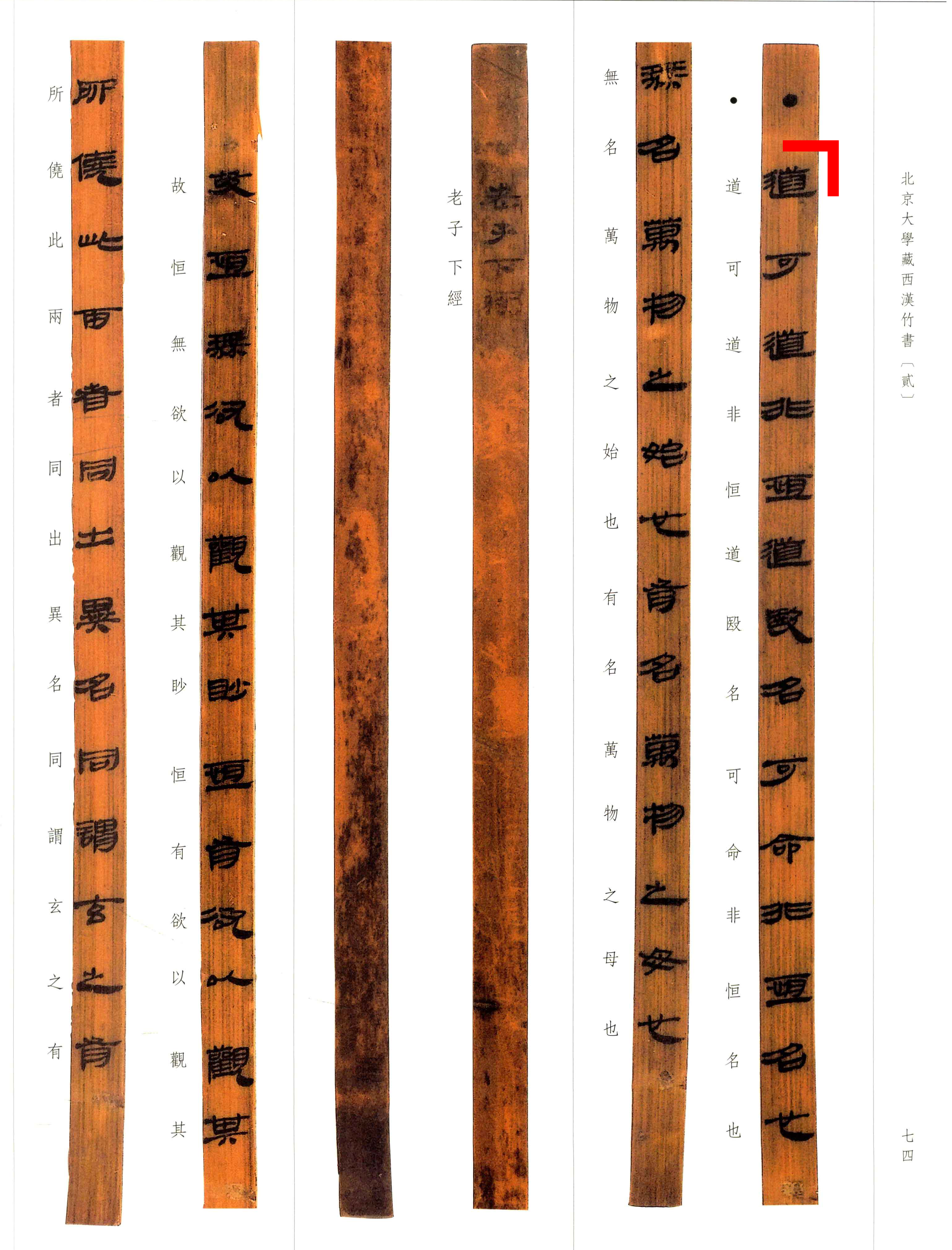
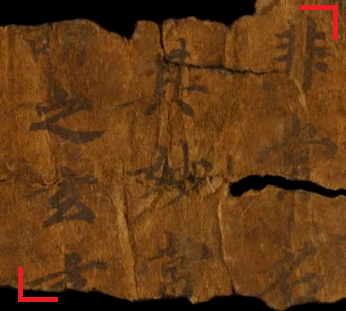
道可道也,非恆道也。名可名也,非恆名也。無名萬物之始也;有名萬物之母也。□恆無欲也,以觀其眇;恆有欲也,以觀其所噭。兩者同出,異名同胃,玄之有玄,眾眇之□。
马王堆老子乙
道可道也,□□□□□□□□恆名也。無名萬物之始也;有名萬物之母也。故恆無欲也,□□□□;恆又欲也,以觀其所噭。兩者同出,異名同胃,玄之又玄,眾眇之門。
王弼
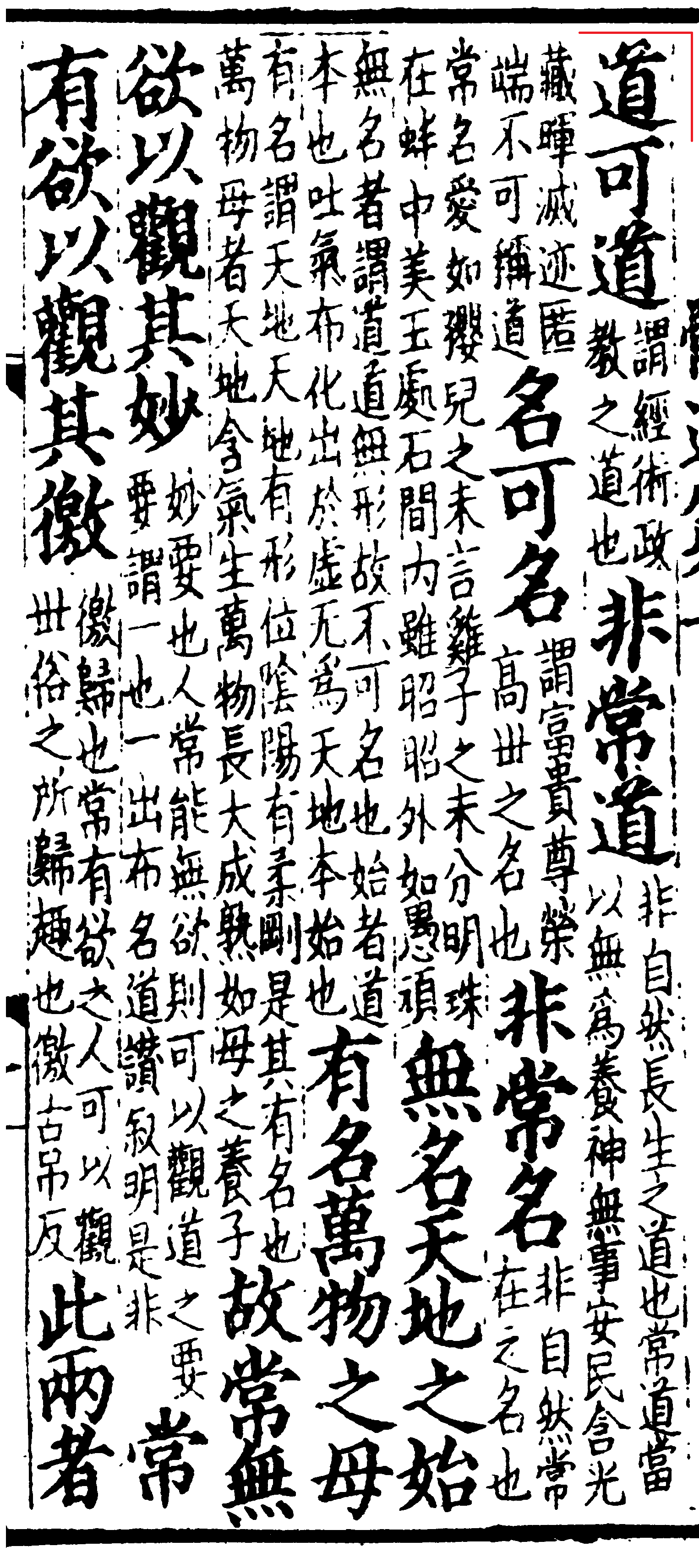
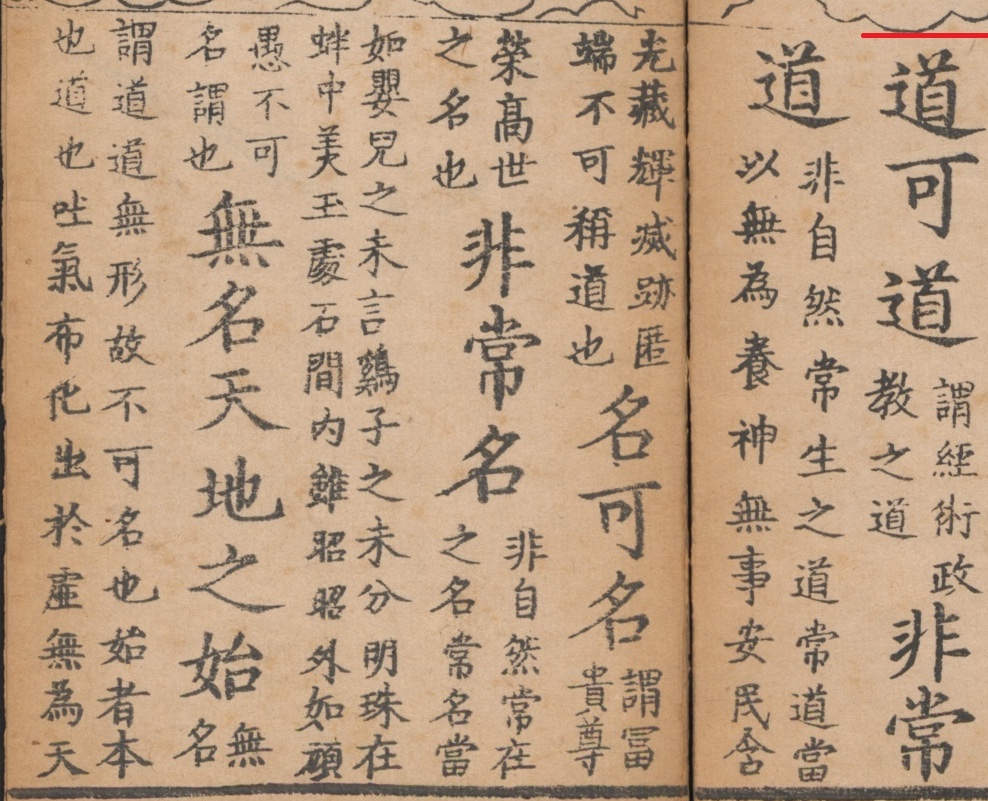
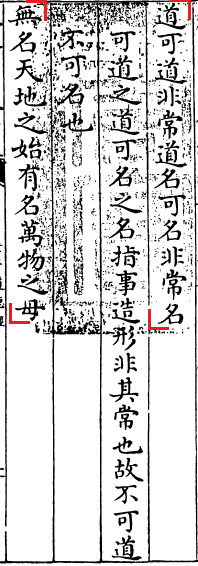
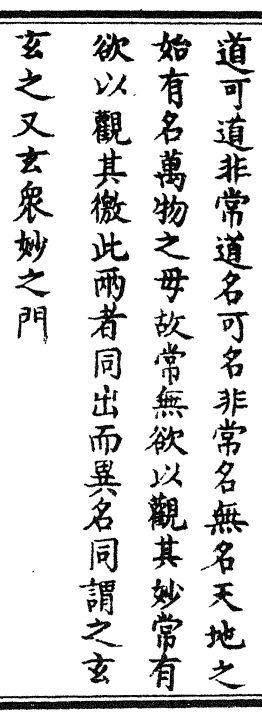
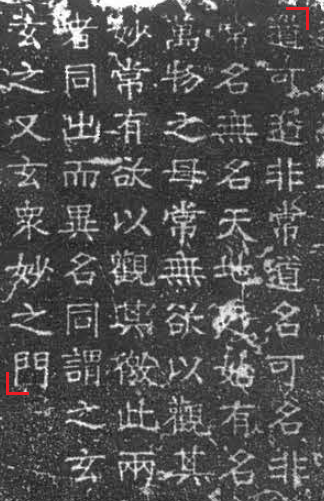
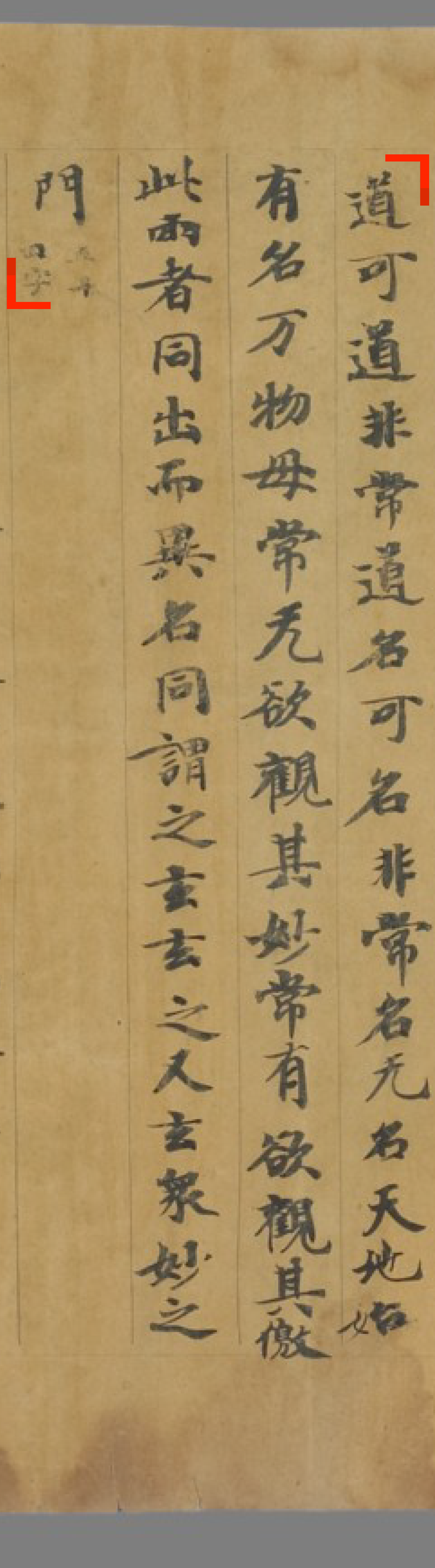
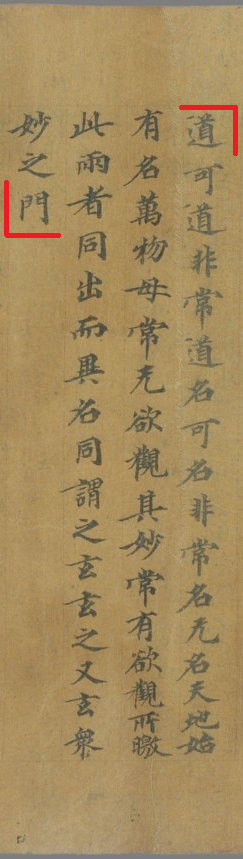
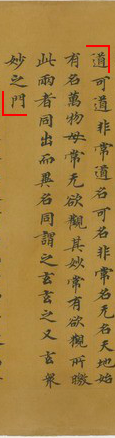
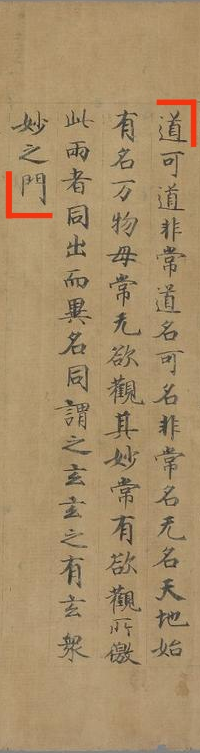
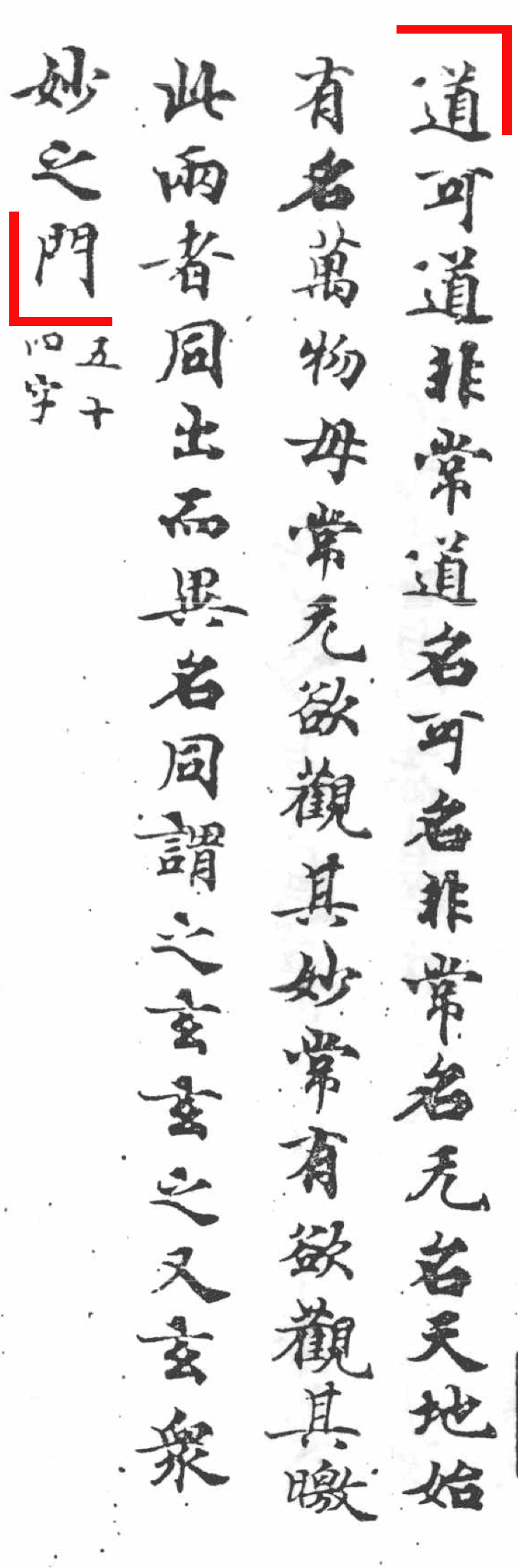
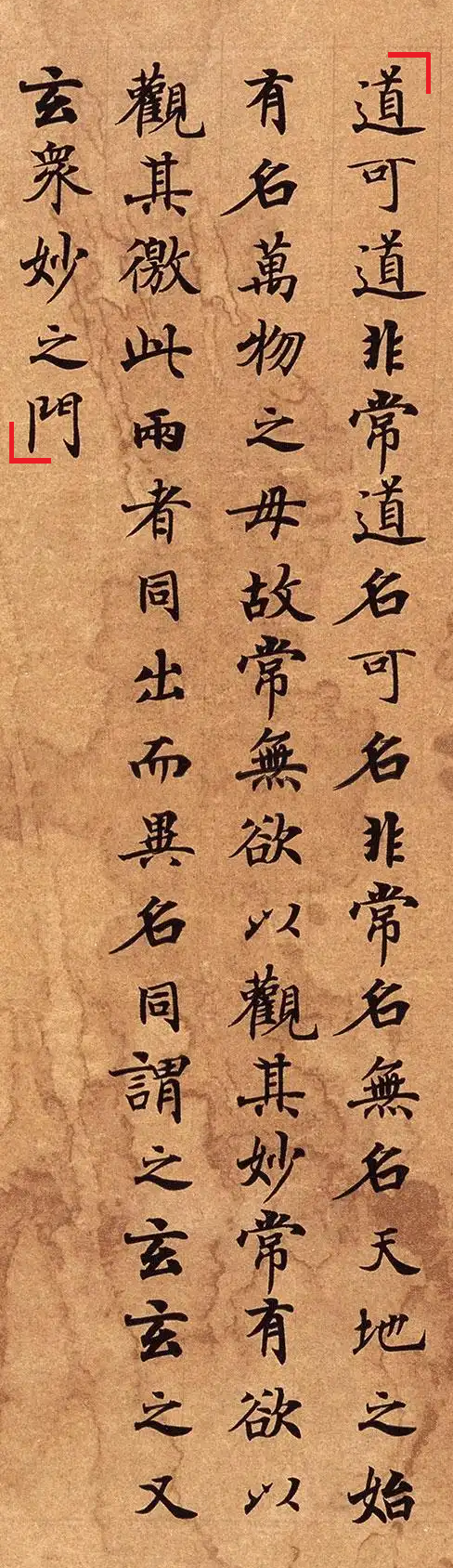
道可道,非常道。名可名,非常名。無名天地之始;有名萬物之母。故常無欲,以觀其妙;常有欲,以觀其徼。此兩者,同出而異名,同謂之玄。玄之又玄,衆妙之門。
译文
English
Paul Carus (1913) →
REASON'S REALIZATION.
1. The Reason that can be reasoned is not the eternal Reason. The name that can be named is not the eternal Name. The Unnamable is of heaven and earth the beginning. The Namable becomes of the ten thousand things the mother.
Therefore it is said:
2. "He who desireless is found
The spiritual of the world will sound.
But he who by desire is bound
Sees the mere shell of things around."
3. These two things are the same in source but different in name. Their sameness is called a mystery. Indeed, it is the mystery of mysteries. Of all spirituality it is the door.
John Chalmers (1868) →
The Embodiment of Tau
The tau (reason) which can be tau-ed (reasoned) is not the Eternal Tau (Reason). The name which can be named is not the Eternal Name.
Non-existence is named the Antecedent of heaven and earth; and Existence is named the Mother of all things. In eternal non-existence, therefore, man seeks to pierce the primordial mystery; and, in eternal existence, to behold the issues of the Universe. But these two are one and the same, and differ only in name. This sameness (of existence and non-existence) I call the abyss — the abyss of abysses, the gate of all mystery.
James Legge (1891) →
Embodying the Tao
The Tao that can be trodden is not the enduring and unchanging Tao. The name that can be named is not the enduring and unchanging name. (Conceived of as) having no name, it is the Originator of heaven and earth; (conceived of as) having a name, it is the Mother of all things.
Always without desire we must be found,
If its deep mystery we would sound;
But if desire always within us be,
Its outer fringe is all that we shall see.
Under these two aspects, it is really the same; but as development takes place, it receives the different names. Together we call them the Mystery. Where the Mystery is the deepest is the gate of all that is subtle and wonderful.
Русский
Д.П. Кониси (1894) →
Тао, которое должно быть действительным, не есть обыкновенное Тао.
Имя, которое должно быть действительным, не есть обыкновенное имя.
То, что не имеет имени, — есть начало неба и земли; то, что имеет имя, — есть мать всех вещей.
Вот почему свободный от всех страстей видит величественное проявление Тао, а находящийся под влиянием какой-нибудь страсти видит только незначительное его проявление.
Эти оба происходят из одного и того же начала, но только носят разное название.
Они называются непостижимыми.
Непостижимое из непостижимых и есть ворота всего таинственного.
Архим. Даниил (Сивиллов) (1828) →
Сущность и сокровенность закона.
Что касается до закона, о котором здесь я намерен говорить, то об нем нельзя рассуждать, как о законе обыкновенном; а также и в отношении к имени, какое наиболее приличествовало бы сему закону, нельзя дать обыкновенное имя; сему закону нет имени, но в начале происхождения мира он имел имя, и назывался тогда матерью, от которой произошли все твари. Впрочем, сие имя не существует только для того, кто хочет рассматривать его совершенства, а кто хочет рассматривать его пространство, для того оно всегда существует: сии два предмета (т. е. совершенство и пространство) вместе произошли от сего закона, хотя и имеют различные наименования, и вместе называются предметами сокровенными. Такая сокровенность того и другого предмета служит дверью, посредством которой отверзается вход в святилище совершенств сего закона.
Л.Н. Толстой (1910) →
То, что может быть названо, не есть начало всего.
То, что без имени, то начало всего.
Понимать это начало может только тот, кто свободен от страстей.
Français
Stanislas Julien (1842) →
La voie qui peut être exprimée par la parole n’est
pas la Voie éternelle ; le nom qui peut être nommé n’est
pas le Nom éternel.
(L’être) sans nom est l’origine du ciel et de la terre ;
avec un nom, il est la mère de toutes choses.
C’est pourquoi, lorsqu’on est constamment exempt
de passions, on voit son essence spirituelle ; lorsqu’on
a constamment des passions, on le voit sous une forme
bornée.
Ces deux choses ont une même origine et reçoivent
des noms différents. On les appelle toutes deux profondes.
Elles sont profondes, doublement profondes.
C’est la porte de toutes les choses spirituelles.
Léon Wieger (1913) →
A. Le principe qui peut être énoncé, n’est pas celui qui fut toujours. L’être qui peut être nommé, n’est pas celui qui fut de tout temps. Avant les temps, fut un être ineffable, innommable.
B. Alors qu’il était encore innommable, il conçut le ciel et la terre. Après qu’il fut ainsi devenu nommable, il donna naissance à tous les êtres.
C. Ces deux actes n’en sont qu’un, sous deux dénominations différentes. L’acte générateur unique, c’est le mystère de l’origine. Mystère des mystères. Porte par laquelle ont débouché sur la scène de l’univers, toutes les merveilles qui le remplissent.
D. La connaissance que l’homme a du principe universel, dépend de l’état de son esprit. L’esprit habituellement libre de passions, connaît sa mystérieuse essence. L’esprit habituellement passionné, ne connaîtra que ses effets.
Deutsch
Reinhold von Plaenckner (1870) →
Es gibt ein Táo, welches jedermann verständlich gezeigt werden kann, das aber ist nicht das ewige Táo in seiner ganzen Vollkommenheit. Wollte man demselben einen Namen geben, so würde dieser das ewige Táo doch nicht klar bezeichnen.
Dieses unnennbare Táo ist der Schöpfer Himmels und der Erde, das dagegen, welches man für jeden verständlich bezeichnen kann, ist die fort und fort erschaffende Kraft der Natur, die Natur selbst, bildlich die Mutter alles Seienden.
Nur der, welcher ganz von Leidenschaften frei ist, wird im Stande sein, das höchste geistige Wesen zu erfassen; der dagegen, dessen Seele beständig von Leidenschaften getrübt wird, sieht nur das endliche — die Schöpfung.
Beide aber, das Unendliche wie das Endliche, sind desselben Ursprungs, für uns jedoch sehr zu unterscheidende Begriffe. Denn beide sind sie erhaben, jenes aber, das Unendliche, ist nicht nur erhaben, sondern auch unermesslich und der Inbegriff, gleichsam die Ausgangspforte alles Geistigen, die höchste Abstraction.
Victor von Strauß (1870) →
Tao, kann er ausgesprochen werden, ist nicht der ewige Tao. Der Name, kann er genannt werden, ist nicht der ewige Name. Der Namenlose ist Himmels und der Erden Urgrund; der Namen-Habende ist aller Wesen Mutter. Drum
»Wer stets begierdenlos, der schauet seine Geistigkeit,
Wer stets Begierden hat, der schauet seine Aussenheit.«
Diese Beiden sind desselben Ausgangs und verschiedenen Namens. Zusammen heissen sie tief, des Tiefen abermal Tiefes; aller Geistigkeiten Pforte.
Richard Wilhelm (1911) →
Verkörperung des SINNS
Der SINN, den man ersinnen kann,
ist nicht der ewige SINN.
Der Name, den man nennen kann,
ist nicht der ewige Name.
Jenseits des Nennbaren liegt der Anfang der Welt.
Diesseits des Nennbaren liegt die Geburt der Geschöpfe.
Darum führt das Streben nach dem Ewig-Jenseitigen
zum Schauen der Kräfte,
das Streben nach dem Ewig-Diesseitigen
zum Schauen der Räumlichkeit.
Beides hat Einen Ursprung und nur verschiedenen Namen.
Diese Einheit ist das Große Geheimnis.
Und des Geheimnisses noch tieferes Geheimnis:
Das ist die Pforte der Offenbarwerdung aller Kräfte.